
Magazine
Stay ahead of the game
Buyer's costs on Curacao: transfer tax, notary fees and what else to budget
By Niels van Vliet, Palmstone Real Estate Curacao luxury real estate specialists, over twenty years of international experience | Last updated: September 2026 Before you fall in love with a villa in Vista Royal or an apartment on Spanish Water, it helps to know exactly what a purchase costs on top of the asking price. On Curacao these buyer's costs are transparent and set by clear rules rather than negotiation, and this guide walks you through every item you'll actually be billed for. The figures below are drawn from published transfer tax rules, the notary fee schedule set by the Joint Court of Justice and current turnover tax rates, all sourced at the end of this article. Where we describe how Palmstone itself works with buyers, that reflects our own practice rather than a published source. Rates can change, so treat this as a planning guide and confirm the exact numbers for your purchase with your notary. When you buy property on Curacao, the price on the listing is not the only figure that matters. As in the Netherlands, the buyer pays a set of one-time costs known as kosten koper. For most homes the total lands somewhere between roughly 5 and 6 percent of the purchase price or tax value, whichever is higher, and each part of it is fixed rather than open to negotiation. Transfer tax The largest single item is the transfer tax, or overdrachtsbelasting. On Curacao this is 4 percent of the purchase price, or of the property's tax value if that is higher, payable when ownership passes to you at the notary [1]. It is a one-time cost, and once it is paid the property is yours free of any further acquisition tax. On a purchase of USD 1,000,000, for example, you would budget around USD 40,000 for transfer tax. Notary fees The transfer of real estate on Curacao always runs through a civil law notary, who draws up the deed of transfer and, where relevant, the mortgage deed. Notary fees are set on a fixed scale by the Joint Court of Justice rather than freely negotiated, and typically fall between 1 and 2 percent of the purchase price [3][4]. The notary is an independent, neutral party who checks the title, confirms there are no outstanding claims and registers the transfer, so this is money spent on the security of your purchase. Land registry and additional charges Beyond tax and notary fees, a few smaller costs complete the picture: Land registry and stamp costs for recording the transfer at the Kadaster, currently a standard rate of around XCG 910 [4]. Turnover tax, or OB, currently 6 percent, charged on the notary's fee rather than on the property itself [2][4]. If you finance with a local mortgage, a separate mortgage deed and its registration, which typically add somewhere in the order of 0.5 to 1 percent of the loan amount to the notary bill [4]. A real estate agent's commission is normally paid by the seller, so as a buyer you do not usually carry that cost. Buyer's costs breakdown at a glance Putting the two main components side by side for a USD 750,000 property: Transfer tax: 4% of the purchase price or tax value, whichever is higher, around USD 30,000. Notary fees: 1 to 2% of the purchase price, fixed scale, USD 7,500 to 15,000. On top of that, a modest land registry and stamp cost, currently around XCG 910, plus turnover tax of 6% on the notary's fee, both minor next to the two items above. Total buyer's costs: roughly 5 to 6% of the purchase price, a realistic budget of around USD 37,500 to USD 45,000 on this example. A worked example Imagine a home priced at USD 750,000. You would set aside roughly USD 30,000 in transfer tax at 4 percent, somewhere between USD 7,500 and USD 15,000 in notary fees, and a modest additional amount for the land registry cost and turnover tax on the notary's work. All together the buyer's costs come to around 5 to 6 percent of the purchase price for a cash purchase, which means a realistic budget of roughly USD 37,500 to USD 45,000 on top of the price. Financing, currency movements and the specifics of your purchase can shift this, so treat it as a guide rather than a fixed quote. Which scenario fits your purchase Buyer's costs follow the same rules for everyone, but a few things change depending on how you buy. Buyer profile | What's different | What stays the same Cash buyer, existing home | No mortgage deed or related registration costs | Transfer tax, notary fee and OB as above Buyer financing with a local mortgage | A separate mortgage deed adds roughly 0.5 to 1% of the loan amount | Transfer tax and notary fee on the purchase itself New-build purchased 'vrij op naam' | Costs are typically already folded into the listed price | The same underlying tax and fee components Purchase through a company or SPF | Notary process and structuring differ; see the SPF overview below | Transfer tax still applies to the underlying propertyTable 1: Buyer profiles and what changes for them If a company or investment structure is part of your plan, our investing in real estate service covers how we support that from a cost and structuring perspective. Discuss it with Palmstone Real Estate Understanding buyer's costs early keeps a purchase calm and predictable. As an international specialist in Curacao's luxury property market with more than 20 years of experience, Palmstone Real Estate can walk you through a clear cost breakdown for a specific property before you make an offer, and introduce you to notaries and, where useful, tax and mortgage advisors we've worked with. Our purchase your property service covers this guidance from the first viewing to the notary. If you're also weighing how to structure the purchase, our overview of the Stichting Particulier Fonds (SPF) covers when that structure makes sense. For a broader look at what to check before you buy, see our guide on important things to pay attention to when purchasing a home in Curacao. And if you're weighing these upfront costs against what a property could return over time, our guide on capital return on your real estate in Curacao looks at what drives value growth on the island. FAQ about buyer's costs on Curacao Can buyer's costs be included in my mortgage? Sometimes, depending on the lender and how much of the purchase price you're financing. It's worth raising directly with your bank or mortgage advisor early in the process, since it affects how much cash you need on hand at the notary. Are there any exemptions from transfer tax? Yes, a narrow one. Protected monuments and properties in the historic city center of Willemstad can qualify for a transfer tax exemption [5]. This does not apply to most villas and apartments outside that designated area. Do buyer's costs apply the same way to building plots? Yes. Transfer tax and notary fees apply to real estate generally, so a building plot is treated the same way as a villa or apartment for the purposes of these costs. When exactly do I need to pay these costs? At the notary, when the deed of transfer is signed and ownership passes to you. The notary collects transfer tax and their own fee as part of that closing, so you'll typically wire the full amount, purchase price plus buyer's costs, ahead of the signing date. About the author This article is written by Niels van Vliet of Palmstone Real Estate, drawing on the firm's day-to-day experience guiding international buyers through the closing process on Curacao. Palmstone Real Estate has more than 20 years of experience in the international real estate market and works with a team of economists, legal experts and tax advisors. A word on accuracy The rates and fixed amounts referenced above, including the transfer tax percentage, the notary fee scale and the land registry cost, were verified against the sources listed below at the time of writing. These figures are set by law or by the Joint Court of Justice and can change, and the exact cost of a specific purchase depends on the property, its price and whether financing is involved. Always confirm the current figures with your notary and tax advisor before finalizing a budget. This article is intended as general information and not as tax or legal advice. Sources Overdrachtsbelastingverordening 1908 (P.B. 1908, no. 49), artikel 12, official Curacao legislation portal, current 4 percent transfer tax rate. Belastingdienst Curaçao, "Omzetbelasting," official tax authority page on turnover tax (OB), the 6 percent rate charged on services including notary fees. Landsverordening houdende nieuwe regels betreffende het notarisambt, official Curacao legislation portal, confirms notary tariffs are fixed by the Joint Court of Justice. Fung-A-Loi & Samandar Notarissen, Curacao civil law notary office, published tariff guidance for the specific 1 to 2 percent notary fee range, the XCG 910 land registry and stamp cost and mortgage deed registration costs. Overdrachtsbelastingverordening 1908, artikel 4 (as amended, P.B. 2016, no. 82), official Curacao legislation portal, transfer tax exemption for protected monuments.
Curacao Is at a Turning Point. Here Is What That Means If You Are Buying Here
By Niels van Vliet, Palmstone Real Estate Curacao luxury real estate specialists, over twenty years of international experience | Last updated: September 2026 Three pieces of research and reporting have been circulating on Curacao this year, and they are not comfortable reading for anyone in our business. A carrying capacity study published in May 2026 by Sustainable Travel International and The George Washington University concludes that the island's infrastructure is at its limit [1]. A separate study on foreign investment finds that the residents surveyed believe, almost without exception, that international buyers are pricing them out [3]. And a market analysis by researcher Odile Micheletti, reported by Dick Drayer in August 2026, shows holiday rentals moving out of the resort zones and into ordinary residential neighborhoods, while supply grows roughly twelve times faster than occupancy [2][5]. We are a brokerage. The obvious commercial move would be to ignore all of this and keep publishing sunset photos. We are doing the opposite, for a simple reason: every one of these findings will affect what you own, what you can do with it, and what it is worth in ten years. You are better served knowing them now than discovering them after you sign. What the research actually says The environmental and infrastructure numbers are not ambiguous. The housing numbers, as you will see, are more contested. Curacao received more than 700,000 overnight visitors in 2024, about 50 percent more than in 2019. Projections put the island at approximately 1.5 million by 2030. That moves the visitor-to-resident ratio from 9.85 to nearly 15 visitors per resident per year [1]. The systems underneath that growth are already strained: Between 80 and 90 percent of the island's wastewater is discharged untreated into the sea [1]. The landfill has around 11 percent of its capacity remaining. Tourists generate about 3.5 times more waste per person than residents, and tourism-related waste is projected to double by 2030 [1]. Coral cover has declined by more than half in key areas. One third of the most popular tourist beaches are rated unsustainable in their current use [1]. The airport is at its operational ceiling, and the expansion currently planned is not sized for the 2030 projection [1]. Roughly 28,000 additional vehicles are expected on the island's roads by 2030 [1]. 58 percent of tourist spending leaves the local economy through imports and foreign-owned operators [1]. On housing, the picture is more contested but no less important. The island's stock of detached homes grew from just under 46,000 in 2011 to just under 50,000 in 2023, while affordability did not improve [7]. Note that this figure excludes apartments and condominiums, which is precisely where new construction and investor demand are concentrated. A 2026 study by Kristelie A. Isenia of the Inter-Continental University of the Caribbean, which received a research award from the Central Bank, surveyed 100 residents aged 15 to 64. It found near-consensus that foreign buyers push prices up (4.37 on a five point scale) and near-total disagreement that housing is affordable across income groups (1.56). The measurable statistical link between foreign investment and affordability, however, was weak: a correlation of 0.243, statistically significant at p = 0.015 but small in magnitude [3]. The honest reading is that the perception is far stronger than the proven causation, largely because Curacao does not systematically track how many homes are foreign-owned or how many have been withdrawn from the residential market into nightly rental. On a sample of 100 people, the strength of feeling is well established. The mechanism is not. The holiday rental market is growing faster than the demand for it This is the finding we would most want a prospective investor to read, and it has nothing to do with sustainability. It is a return warning. Odile Micheletti, who spent years working in property management on the island, analyzed data from Airbnb and market analyst AirDNA for a June 2026 report titled Vacation Rentals and Sustainable Tourism Development in Curacao. Her numbers: Curacao now has roughly 3,850 active holiday rental listings [2]. Supply grew 19.7 percent in a single year [2]. Average occupancy rose 1.7 percent in the same period, to around 66 percent [2]. Supply is therefore expanding about twelve times faster than the demand absorbing it [2]. Parts of the market are heading toward saturation. The consequence is not dramatic, but it is real: more properties competing for demand that is barely growing means increased competition between hosts, downward pressure on nightly rates, and thinner returns on properties in less attractive locations. The effect is not evenly distributed, and that is the whole point. Jan Thiel, with 336 listings, is the island's largest and most mature holiday rental market, with occupancy running between 55 and 83 percent and higher for some luxury villas [2]. Penstraat has 107 listings and Punda 150 [2]. On Penstraat, waterfront properties and those around the Avila Beach Hotel reach 85 to 90 percent occupancy, while properties a few streets inland sit considerably lower [2]. Micheletti concludes that the waterfront stretch in particular is approaching its ceiling: adding more holiday rentals there does not generate more visitors, it divides the same demand across more properties. Even within an established tourism zone, in other words, the difference between a good address and one two streets away is now measurable in occupancy rather than a matter of taste. The growth is in small units, not villas The AirDNA listing data behind the report shows active listings rising from roughly 2,100 in mid-2023 to around 3,800 by May 2026, an increase of 19.6 percent in the past year alone [2]. Broken down by size, the growth is overwhelmingly in one and two bedroom properties, which together account for roughly seventy percent of all listings on the island. Four, five and six bedroom properties have barely grown at all [2]. That distinction matters more than it first appears. One and two bedroom units are apartments, studios and annexes, which is precisely the housing stock that residents of Curacao depend on. Villas are not what is driving the displacement debate. The small units are. If you are considering a one bedroom apartment in a residential neighborhood as a rental investment, you are buying into the exact segment that regulation is being designed to address. Most listings earn very little The AirDNA revenue mapping in the report is the finding least likely to appear in a sales brochure, so we will state it plainly. Annual revenue per listing varies enormously across the island, and the distribution is not gradual. The properties in the highest revenue band cluster tightly in the established tourism zones, around Jan Thiel and the Willemstad waterfront. Across the residential neighborhoods inland, the overwhelming majority of listings fall into the lowest revenue bands, with a substantial number generating only a few hundred to a few thousand guilders per year [2]. In other words, a large share of the holiday rentals that have appeared in ordinary neighborhoods are not profitable enterprises. They are marginal ones. That is worth knowing for two reasons. It means the "just put it on Airbnb" return model is not supported by the actual data for most locations. And it means the properties generating genuine returns are concentrated in exactly the zones where holiday rental is uncontroversial. What this means for a buyer In a market where supply is outrunning demand, the average return falls while the return on genuinely good locations holds. Buying anything at all is no longer a strategy. Buying the right thing, in the right zone, is. The structural mechanism Research by Arjen Alberts on Aruba and Sint Maarten describes what the study calls a mandatory growth paradox: each new hotel requires staff, staff require immigration, immigrants require housing and services, and that in turn requires more growth to fund [4]. Housing pressure on a small island is not a side effect of tourism. It is built into the model. Why we are telling you this Because it changes what a good purchase looks like. For twenty years, buying on Curacao was a straightforward proposition: find something beautiful, buy it, enjoy it, rent it when you are not there. That era is closing. The carrying capacity study states plainly that the choices made in the next two years determine whether Curacao manages its growth or is managed by it. Either outcome reshapes the market. Neither leaves the current rules intact. We would rather you buy an asset that survives that transition than one that looks good until the rules change. Five things this changes for a buyer 1. Scarcity here is structural, and that supports value. Curacao is 444 square kilometers with a landfill nearly full, an airport at capacity, and a stock of detached homes that added roughly 4,000 units in twelve years [7]. Apartments and condominiums are not in that figure and have grown faster, so the constraint is tighter on land and villas than on apartments. But supply cannot respond quickly to demand, and the limits are physical rather than bureaucratic. For a long-horizon owner, that is the single most favorable fact in this entire report. It is also the reason the island cannot simply build its way out of the problem. 2. Registration and licensing of holiday rentals is now the consensus recommendation. This is worth stating carefully, because it is the single most consequential item on this list. Two independent pieces of research arrived at the same recommendation in 2026. Micheletti's analysis calls for a mandatory registration and licensing system for all holiday rentals: registration with the Chamber of Commerce and the tax authority, declaration of income, safety requirements, and rules covering noise, parking, waste, maximum occupancy and complaints [2]. The carrying capacity study, commissioned by the government of Curacao, independently recommends a regulatory framework for short term rentals built on registration, zoning and enforcement [1]. Neither is law today. But when a government-commissioned study and an independent market analysis converge on the same instrument, the direction of travel is not really in doubt. A separate 2026 study by Kristelie A. Isenia adds further proposals aimed at buyers: a higher tax rate for foreign purchasers, a levy on unused properties, and restrictions in particular market segments, alongside lower import duties on building materials and support for local first-time buyers [3]. Build this into your model as a probability rather than assuming today's conditions persist. A property whose entire return case depends on unrestricted nightly rental carries a policy risk you have not priced. A property that is compliant, correctly zoned and registered from day one carries almost none. 3. Location is no longer about the view. It is about which category the neighborhood falls into. This is the point we would most like buyers to absorb, and Micheletti's report makes it unusually concrete. She divides the island into areas where holiday rental fits and areas where it does not. Jan Thiel is her clearest example of the first category: the largest and most mature holiday rental market on the island, and a place where she considers holiday rental appropriate provided quality, safety and density are managed. The same logic applies to the other established resort and tourism zones [2]. Against that she identifies neighborhoods that were built for residents and should stay that way, naming Julianadorp, Santa Maria, Buena Vista, Suffisant, Brievengat, Jongbloed, Abrahamsz, Montana, Mahaai and Emmastad. She calls these Residential Stability Protection Zones and argues that permanent occupancy and long term rental should take policy priority there over further holiday rental growth. Two honest caveats. That designation has no legal status whatsoever. Micheletti is explicit that her boundaries are an analytical tool for spatial policy, not existing or statutory zoning, and that platform data changes constantly, making the report a snapshot of 2026. Her report also does not claim that holiday rental is already displacing residents on Curacao at scale. Her argument is that the effect is well documented in other destinations and that Curacao still has time to act before it becomes hard to reverse. But for a buyer the practical reading is simple. A property in an established tourism zone is doing what that zone exists for. A property in one of those ten neighborhoods is sitting in the area a researcher has explicitly flagged for protection, at a moment when both she and a government-commissioned study are recommending zoning and enforcement. When regulation arrives, it will not arrive evenly. Ask what the property is zoned for and which category its neighborhood falls into, not just what the previous owner was doing with it. 4. Waste water is the due diligence item almost no buyer asks about. Start with a fact that surprises most international buyers. Curacao has virtually no central sewerage. With the exception of a handful of neighborhoods, among them Julianadorp and Emmastad, properties across effectively the whole island rely on a cesspit or septic tank on their own plot. That is not a defect of the property you are viewing. It is the island standard. It also explains the figure quoted earlier. When 80 to 90 percent of the island's waste water is discharged untreated [1], that is not an abstraction about a municipal plant somewhere. It is the aggregate of thousands of individual systems on individual plots, including the one you are about to buy. So the question is not whether a property is connected. It usually is not. The questions that matter are: What system is on the plot, how old is it, and what is its capacity? How often does it need to be emptied? Emptying starts at around XCG 120 per service, roughly 67 US dollars at the pegged rate, and rises with volume. The annual cost is therefore driven almost entirely by frequency, which is driven by occupancy. How does the soil drain, and does the system struggle in the rainy season? How close is it to groundwater, a well, or the coast? Does the development have its own waste water treatment, or does every plot handle its own? This matters considerably more for a rental property than for a private home. A three bedroom house occupied by a couple places a modest and predictable load on a cesspit. The same house running at 70 percent occupancy with changing guests all year places a far heavier one. Emptying frequency goes up, cost goes up, and the risk of failure at the worst possible moment goes up with it. The arithmetic is simple enough to do on the back of an envelope. If a property in private use needs emptying a few times a year and the same property in year-round rental needs it several times more often, the difference is not large in absolute terms, but it is a recurring cost that appears in no listing and in almost no buyer's return model. There is a forward-looking reason to ask as well. If the island tightens waste water regulation, and both studies point toward tighter environmental enforcement, the compliance cost lands on the individual property owner rather than on a utility. A property with a modern, correctly sized system, or one in a development that handles treatment collectively, is not paying a luxury premium. It is holding a hedge. Then ask the ordinary questions too: water supply and what desalinated water costs at rental volumes, backup power, road access at peak season, and waste collection. For the full purchase checklist, see our article on important things to pay attention to when purchasing a home in Curacao. 5. Reef and beach quality are part of your asset, not the backdrop. If more than half the coral cover in key areas is gone and a third of the busiest beaches are rated unsustainable [1], then a villa whose value rests on the quality of the water in front of it carries a depreciation risk that does not appear on any valuation report. Properties near protected areas, in managed developments, or with less exposure to mass day-visitor pressure are positioned differently from properties that sit on the most crowded stretch of coast. What we will not do We will not help a client convert ordinary residential housing into nightly holiday rental. That is partly a matter of where we want to stand on an island where we live and work. It is also, plainly, commercial judgement, and the data supports it. That segment is the most exposed to a permit regime that two independent studies now recommend [1][2], it attracts the most local opposition, and according to the AirDNA revenue distribution it is where the weakest returns are concentrated [2]. It combines the highest policy risk with the lowest yield. We would rather place you in the zones where holiday rental is uncontroversial and where the revenue actually is. If you are looking for a broker who will tell you that none of this applies to you, we are not that broker. The window The carrying capacity study ends on one line that is worth repeating, because it applies to owners as much as to policymakers. The choices made over the next two years will decide whether Curacao manages its growth or is managed by it [1]. The version where the island manages it, with limits on holiday rental in residential areas, real investment in waste water and waste processing, and protected reefs and beaches, is the version in which property here holds and grows its value. The version where it does not is the version in which everyone eventually loses, owners included. We are in the first camp, and we advise accordingly. If you are considering Curacao and you want a conversation that includes the risks rather than one that avoids them, our purchase guidance team would be glad to have it. Frequently asked questions Is now a good time to buy property on Curacao? Selectively, yes. Physical scarcity on a 444-square-kilometer island supports long-term value, but average returns are softening as holiday-rental supply grows about twelve times faster than demand [2]. The right property in the right zone holds up; buying anything at all is no longer a strategy. Will Curacao regulate Airbnb and short-term holiday rentals? It is not law yet, but in 2026 a government-commissioned carrying capacity study and an independent market analysis both recommended a mandatory registration and licensing system for holiday rentals [1][2]. Treat tighter rules as a probability, and favor a property that is compliant, correctly zoned and registered from day one. Which areas are best for a holiday-rental investment on Curacao? Established tourism zones such as Jan Thiel and the Willemstad waterfront, where holiday rental is uncontroversial and the genuine revenue is concentrated. Ordinary residential neighborhoods carry the highest policy risk and, according to the AirDNA data, the weakest returns [2]. What should I check about waste water before buying on Curacao? Most properties rely on their own cesspit or septic tank rather than central sewerage. Ask what system is on the plot, its age and capacity, how often it needs emptying (from around XCG 120 per service), how the soil drains and how close it sits to groundwater or the coast. This matters far more for a rental than for a private home. About the author Niels van Vliet is a broker at Palmstone Real Estate, an international agency specializing in luxury property, valuations and investments on Curacao. He and the Palmstone team have worked in the international market for more than twenty years, and the team includes academically trained specialists such as lawyers and economists. A word on accuracy The figures and findings above were verified against the sources listed below at the time of writing. Figures on listings, occupancy and revenue in the holiday rental market are a 2026 snapshot of platform data and change continuously. This article is intended as general information and not as tax, legal or investment advice. Sources 1. Curacao Tourism Carrying Capacity Study, commissioned by the government of Curacao (Curacao Tourism Board and the Ministry of Economic Development), carried out by Sustainable Travel International and The George Washington University, executive summary presented to the Council of Ministers in 2026. 2. Odile Micheletti, "Vacation Rentals and Sustainable Tourism Development in Curacao," June 2026, based on data from Airbnb and AirDNA. No public copy of the report itself is available; see source 5 for reporting on its findings. 3. Kristelie A. Isenia, "The impact of foreign real estate investment on the housing market of Curacao," 2026, Inter-Continental University of the Caribbean. View the reporting, awarded a research award by the Central Bank, see the confirmation. 4. Arjen Alberts, "Small Island Tourism Economies and the Tourism Area Lifecycle: Why Aruba and Sint Maarten have exceeded their carrying capacity," doctoral research, University of Amsterdam, 2020. 5. Dick Drayer, reporting for Curacao.nu, 18 August 2026: holiday rentals moving into ordinary neighborhoods and Airbnb growth in Julianadorp. 6. Reporting by Paradise FM and Curacao.nu. 7. Central Bureau of Statistics Curacao, 2023 Census, first results.

Buying property on Curacao: the process from A to Z
By Niels van Vliet, Palmstone Real Estate Curacao luxury real estate specialists, over 20 years of international experience | Last updated: August 2026 Buying a home on a Caribbean island can sound complicated, but on Curacao the process is well ordered and secure. This guide takes you through every step, from your first offer to the moment the deed is signed and the keys are yours. One of the reassuring things about Curacao is that there are no restrictions on foreign ownership. Whether you come from the Netherlands, the United States, Canada or elsewhere, you can buy property on the same terms as a local resident. The island uses a Dutch-style legal system, so the framework will feel familiar to European buyers and transparent to everyone else. The steps below reflect the standard process for a residential purchase; costs are confirmed against the source listed below. Step one: the offer and the purchase agreement Once you have found the right home and agreed a price, you and the seller sign a purchase agreement, the koopovereenkomst. This document sets out the price, what is included, any conditions such as financing or an inspection and the intended transfer date. It is the moment the deal becomes concrete for both parties. Step two: the deposit in escrow After signing, a deposit of usually 10 percent of the purchase price is placed in the escrow account of the notary. This money is held safely and neutrally until completion, protecting both buyer and seller while the paperwork is prepared. Step three: the notary and the due diligence On Curacao every property transfer runs through a civil-law notary, an independent official who represents neither side and guarantees that the transaction is legally sound. The notary checks the title, confirms there are no outstanding mortgages or claims and prepares the deed of transfer. Part of that due diligence is confirming whether the land is freehold or held under long lease, a common structure on Curacao, since that affects what you own, what you owe annually and how a bank views the property. This stage typically takes around ten to twelve weeks. Step four: signing the deed and registration On the completion date you meet at the notary's office to sign the deed of transfer. The balance of the purchase price and the buyer's costs are settled, and the notary registers the transfer at the Land Registry, the Kadaster. From that moment the property is legally yours. Costs of buying and the annual property tax Budget for buyer's costs of roughly 5 to 6 percent on top of the price, made up mainly of a flat 4 percent transfer tax and the notary's fee of around 1 to 2 percent. After purchase you pay an annual property tax, the OZB, that generally falls between 0.4 and 0.6 percent of the value, progressive by bracket [1]. These figures cover the transaction itself; for the wider due diligence checklist worth going through before you commit, see our guide on what to pay attention to when purchasing a home on Curacao. If you plan to rent the home out afterward, it's worth planning that from the start too; our rental management service can take that over for you once you own the property. Buying through a company or foundation Some buyers, particularly those purchasing as an investment or planning ahead for succession, choose to hold the property through a structure rather than in their own name. Curacao offers well-established local vehicles for this, such as a private fund foundation (SPF) or a company structure using a Curacao investment company (CBV), which can be more tax-efficient than personal ownership depending on your situation. This is worth deciding before the purchase agreement is signed, since it affects how the deed itself is drafted. Our investment services team can help you weigh up whether a structure makes sense for your specific purchase. How Palmstone helps A smooth purchase comes down to good guidance. As the international specialist in luxury property on Curacao, Palmstone Real Estate's purchase guidance walks you through every step, introduces you to trusted notaries and advisors and makes sure the terms protect your interests. From the first viewing to the signing of the deed, we keep the process clear and calm. If you're weighing up the wider financial picture, our guide on why Dutch and American investors choose Curacao goes deeper into the legal, tax and rental considerations. When you are ready to begin, we are glad to open the doors. Frequently asked questions How long does the process take from offer to keys? Most purchases complete in roughly ten to twelve weeks from signed agreement to the deed, though it depends on financing and how quickly due diligence clears. Do I need to be on Curacao to complete the purchase? No. Many of our international buyers sign remotely or grant power of attorney to a local representative, and only travel for a final viewing or to collect the keys, if at all. Can I finance the purchase from abroad? Some buyers arrange financing through their home country. Local financing is possible but generally comes with more conservative terms than buyers may expect from home, often a larger down payment, so many purchases in this segment are made in cash. A professional valuation or appraisal report can also strengthen a financing application, wherever the financing comes from. What happens if the land is held under long lease rather than freehold? You still buy with full legal certainty, but the notary's due diligence confirms the remaining term and renewal conditions, since these affect financing, resale and your annual obligations. This is checked as standard before you commit. About the author Niels van Vliet is a broker at Palmstone Real Estate, an international agency specialising in luxury property, valuations and investments on Curacao. The Palmstone team brings over twenty years of international experience and includes academically trained specialists such as lawyers and economists. A note on accuracy The costs, timelines and tax rates in this article were checked against the Curacao tax authority in July 2026. This is general information, not legal advice. Procedures and figures can change, so always confirm the details of your purchase with your notary and adviser. Sources Belastingdienst Curacao, overdrachtsbelasting en onroerende-zaakbelasting (belastingdienst.cw), 2026.

Why Curacao appeals to Dutch and American investors
By Niels van Vliet, Palmstone Real Estate Curacao luxury real estate specialists, over 20 years of international experience | Last updated: August 2026 Turquoise water and year-round sunshine draw people to Curacao, but the investors we work with stay for the fundamentals: a stable legal system, a currency tied to the US dollar and open access for foreign buyers. Together they make the island one of the most compelling real estate destinations in the Caribbean. Curacao sits outside the hurricane belt on the southern edge of the Caribbean, a short flight from both the United States and, via direct connections, the Netherlands. For Dutch and American buyers alike, it combines the appeal of a tropical second home with the reassurance of a mature, transparent market. A legal system built on familiar ground As an autonomous country within the Kingdom of the Netherlands, Curacao applies a civil code rooted in Dutch legal principles. Every transfer runs through an independent, government-appointed notary, and ownership is recorded in a public land registry. For European investors the framework feels close to home; for American investors it offers a level of legal certainty that is genuinely rare in the wider region. One local detail worth knowing upfront: a meaningful share of land on the island is held in long lease rather than freehold, a legacy of how land was historically issued by the government. This does not restrict international ownership, but it does affect exactly what you acquire and how a bank will view the property, so it is one of the first things a serious advisor verifies on your behalf. We go through the practical due diligence steps in more detail in our guide on what to pay attention to when purchasing a home on Curacao. A currency pegged to the dollar and priced that way too Since 31 March 2025, Curacao's currency has been the Caribbean guilder, the XCG, which replaced the Netherlands Antillean guilder and carries forward the same fixed peg to the US dollar of 1.79 that its predecessor held for decades [1]. In practice, luxury property on Curacao is very often priced and traded in dollars regardless of the official currency, which removes much of the currency risk that can complicate investing elsewhere in the Caribbean and Latin America, and makes returns easier to plan for buyers who think in dollars or euros. Open access and a competitive tax position There are no restrictions on foreign ownership. You do not need residency or a local partner to buy, and the buying process is the same for everyone. The one-time transfer tax is a flat 4 percent of the purchase price, one of the lighter rates in the region at the top of the market, and the annual property tax, the OZB, is levied on market value at progressive rates from 0.4 percent to 0.6 percent. Rental income from a second home is taxed on 65 percent of gross receipts, an automatic standard deduction of 35 percent for expenses before ordinary progressive rates apply, which keeps reporting simple. Tax-efficient structures for holding property Beyond the individual tax rates sits a further advantage. Curacao offers well-established local structures, such as a private fund foundation (SPF) or a company structure using a Curacao investment company (CBV), that can make holding property more tax-efficient than owning in your own name, also with a view to succession and resale. Which form fits is specialist and depends on your circumstances, but it's a question worth raising early with your advisor rather than after the purchase. The penshonado advantage for buyers over fifty On top of the standard framework, the penshonado scheme lets qualifying residents over fifty have their foreign-source income taxed at a reduced flat rate rather than at progressive rates, subject to conditions on age, prior residence abroad and the value of the home acquired. For a retiring investor drawing income from Europe or North America, this frequently outweighs every other line in the calculation, and it's one of the clearest ways Curacao distinguishes itself from other islands in the region [2]. Strong, diversified rental demand Tourism is a pillar of the island's economy, and demand for quality holiday rentals in sought-after areas such as Jan Thiel, Vista Royal and the resorts of Boca Gentil and Coral Estate is consistently strong. Curacao welcomed more than 1.5 million visitors in 2024, roughly 700,000 stayover guests and around 835,000 cruise passengers, and Hato International Airport now connects close to two dozen international destinations [3]. A well-chosen villa or apartment can serve as a personal retreat and a source of rental income, with the flexibility to shift between the two as your plans evolve. We explore how a vacation home evolves into a source of passive income in our article on turning a second home into a smart investment. A key reason behind that demand is the climate. Because Curacao lies below the hurricane belt, the island enjoys pleasant holiday weather throughout the year. There is no real low season, which supports high occupancy rates for rentals and makes the island just as comfortable to stay in yourself, in any month you choose. Invest with local eyes The fundamentals explain why Curacao works as an investment; local knowledge decides how well your particular purchase performs. Which streets rent through the quiet months, where a sea view genuinely commands a premium, which resorts manage rentals well and which do not, these are the judgments that separate a fair return from a strong one. We weigh location, rental potential and long-term value with you, and give you access to homes in the most desirable neighborhoods, often before they reach the open market. Whether you are buying to retire, to rent or to hold, we help you invest with your eyes open. Frequently asked questions How does Curacao compare with Aruba and Bonaire for investors? Each island has a different profile. In short, Curacao combines the largest, most diversified market of the three with the lightest annual tax burden at the top end and a dedicated investor permit program, while Aruba is more mature and expensive to enter and Bonaire is the smallest and least liquid of the three. We cover the full comparison, with sources, in our dedicated Aruba vs Curacao vs Bonaire guide. Do I need to set up a company or foundation to buy property? No, buying in your own name is straightforward and common. A structure such as an SPF or a CBV is optional, and mainly relevant if tax efficiency, succession planning or asset separation matter to you specifically. We can introduce you to specialists who assess whether it's worth setting one up for your situation. Can non-residents get financing on Curacao? Yes, though terms are generally more conservative than what buyers may be used to at home, often requiring a larger down payment. Many of our clients purchase in cash or arrange financing through their home country instead, so it's worth exploring both routes early in the process. What ongoing costs should I plan for beyond the purchase price? Budget for the annual OZB property tax, HOA or resort fees where applicable, insurance and property management if you plan to rent the villa out. None of these are large on Curacao by international standards, but they add up, and we walk every buyer through a realistic annual budget before they commit. About the author Niels van Vliet is a broker at Palmstone Real Estate, an international agency specialising in luxury property, valuations and investments on Curacao. The Palmstone team brings over twenty years of international experience and includes academically trained specialists such as lawyers and economists. A note on accuracy The tax points and market figures in this article were checked against the Curacao tax authority, Statistics Netherlands (CBS) and tourism statistics in July 2026. This is general information, not financial or tax advice. Conditions and rules can change, so always confirm your situation with a qualified advisor. Sources Centraal Bureau voor de Statistiek (CBS), De Nederlandse Caraiben vijftien jaar na de staatkundige hervorming, chapter 5: Economie en toerisme. Belastingdienst Curacao, penshonadoregeling (belastingdienst.cw). Curacao Tourist Board and Tourism Analytics, 2024 visitor statistics.

Aruba vs Curacao vs Bonaire: a buyer's comparison for international investors
By Niels van Vliet, Palmstone Real Estate Curacao luxury real estate specialists, over twenty years of international experience | Last updated: August 2026 When diversifying a high-end real estate portfolio, the Caribbean islands of Aruba, Bonaire and Curacao frequently appear on the shortlist of European and North American investors. They sit within sight of one another, yet the legal and fiscal terms on offer differ sharply from one island to the next. Investors who look past first impressions, seeking a strategic balance between capital appreciation, rental yield and legal certainty, often find that Curacao offers the most balanced framework for long-term growth. Allocating capital in these tropical surroundings requires moving beyond the allure of white sandy beaches and the promise of endless sunshine. It demands a critical look at market liquidity, property law and the scalability of your investment. Understanding the structural differences between these three islands is the foundational step toward a sound acquisition in the luxury segment. Statistical and legislative figures below are referenced to the relevant authority; rates and market observations without a reference reflect the terms we apply in our own transaction practice. Market dynamics: identifying value across the ABC islands Aruba is characterized by a mature, heavily tourism-dependent market. While undeniably popular among vacationers seeking a reliable getaway, the real estate sector faces constraints regarding inventory in the most established coastal areas. Many premium zones are already extensively developed, which tempers the potential for rapid capital appreciation. You are often paying a significant premium for established assets, which makes it a demanding environment for investors seeking above-average returns on new acquisitions. Bonaire remains a highly specialized niche, heavily focused on eco-tourism and marine preservation, and the island is a favorite among diving enthusiasts. That focus has not held values back. According to Statistics Netherlands (CBS), the price index for existing homes on Bonaire rose from 100 in 2011 to 192.9 in 2024, while annual transactions climbed to 275, an increase of 77 percent over the same period [1]. The constraint lies elsewhere. A few hundred sales a year across the entire island limits comparables, exit options and the availability of true high-end inventory, and local authorities have signaled a preference for affordable housing and tighter permitting. For serious investors looking for a diverse and liquid portfolio, that small footprint remains the limiting factor. Curacao stands apart due to its scale and its professional infrastructure. Alongside tourism it retains international business services, one of the region's significant harbors, and a substantial healthcare and logistics base, giving it a broader demand base than visitor numbers alone suggest. In its most recent Article IV consultation on Curacao and Sint Maarten, the International Monetary Fund noted a vigorous post-pandemic recovery underpinned by stayover tourism that is outperforming Caribbean peers [2]. For a high-net-worth investor this means more transactions, more professional counterparties, more comparables and significantly more opportunity for long-term value preservation. Whether you are looking for a secluded villa or a strategic commercial asset, Curacao provides the depth that the other islands sometimes lack. Comparative overview for investors Feature | Aruba | Bonaire | Curacao Market Focus | Mass tourism | Niche eco-tourism | Diversified luxury Market Size | Mature, largely built out in prime zones | Smallest of the three | Largest of the three Liquidity and Comparables | Established but expensive to enter | Limited by transaction volume | Deepest of the three Asset Class | High entry price | Limited scale | Diverse high-end Economic Basis | Heavily tourism-led | Tourism and nature-led | Tourism plus services, port, healthcareTable 1. Market profile of the ABC islands for property investors Legal certainty and fiscal architecture A common concern among international buyers is the perceived immaturity of Caribbean real estate law. Curacao actively counters this narrative. The jurisdiction operates with a highly transparent property registry and robust legal frameworks rooted in Dutch civil law, and every transfer runs through an independent, government-appointed civil-law notary. In terms of legal certainty, all three islands operate under the influence of the Dutch legal system, but their constitutional positions differ. Aruba and Curacao are autonomous countries within the Kingdom, each with its own parliament, government and, importantly for an investor, its own tax policy. Bonaire has been a special municipality of the Netherlands since 2010, one of the three BES islands, and therefore follows Dutch legislation adapted for the Caribbean. That distinction sounds administrative, but it drives nearly every fiscal difference set out below. None of the three restricts foreign ownership, so an international buyer purchases on exactly the same terms as a local resident. One point specific to Curacao belongs here rather than in the fine print. A meaningful share of land on the island is held in long lease rather than freehold, a legacy of how land was historically issued by the government. This does not prevent international ownership, but it determines exactly what you are acquiring, what you owe annually beyond tax and how a bank will view the property if you finance it. Establishing the ownership form, the remaining term and the attached conditions is one of the first things a serious advisor does on your behalf. Currency and dollar exposure Currency is one of the clearest distinctions between the three, and it works in the buyer's favor on all of them. As Statistics Netherlands records, the Caribbean guilder replaced the Netherlands Antillean guilder as the official currency of Curacao and Sint Maarten on 31 March 2025, while Aruba retains its own florin and Bonaire uses the US dollar [3]. The Caribbean guilder carries forward the same fixed peg to the US dollar of 1.79 that its predecessor held for decades. In practice all three islands are dollar-linked, which keeps currency risk low for buyers who think in dollars and manageable for those who think in euros. On Curacao, luxury property is very often priced and traded in dollars regardless of the official currency, so American buyers deal in familiar numbers from the first viewing. Transfer tax and the cost of buying The one-time transfer tax differs in a way that matters specifically at the top of the market, which is where it is least often examined. On Curacao the rate is a flat 4 percent of the agreed purchase price, with exemptions available for protected monuments and property in the historic city center. Bonaire sits somewhat higher at around 5 percent. Aruba applies a two-bracket structure, and according to the Departamento di Impuesto the rate is 3 percent on the first Afl 250,000 of value and 6 percent on everything above that, calculated on the higher of the deed price or the registered value [4]. The lower bracket is therefore largely irrelevant for the properties international buyers actually consider. Read that way, the picture inverts a common assumption. In the luxury segment Curacao is the cheapest of the three to enter, not the most expensive, and the gap widens as the purchase price rises. On a property of one million dollars, the difference between Curacao and Aruba amounts to roughly twenty thousand dollars payable at the notary, before a single guest has stayed. The annual burden Recurring costs are modest on all three islands by European standards, but they are calculated so differently that headline figures mislead. Curacao replaced its old land tax with a property tax known as the OZB in 2014. It is levied on market value at progressive rates rising from 0.4 percent in the lowest bracket to 0.6 percent for higher-value property. Aruba levies a comparable land tax on a progressive scale, with an exempt band at the lower end and a top rate of 0.6 percent, reassessed every five years. Bonaire takes an entirely different route by taxing a deemed yield rather than actual income. The Dutch Caribbean tax authority sets the benefit from a property at 4 percent of its assessed value and taxes that at 17.5 percent, an effective rate of 0.7 percent, with an exemption on the first USD 70,000 of value for a second home [5]. That headline figure is not the whole story, because the island levies an additional surcharge on top of the assessment, which pushes the real annual charge for a second home or a rented property meaningfully higher [5]. For a non-resident owner, Bonaire is therefore the heaviest of the three annually, and Curacao the lightest at the bottom of its band. How rental income is taxed This is where the islands genuinely diverge, and where net return is decided rather than merely influenced. On Curacao, rental income from a second home is taxed on 65 percent of gross receipts, which amounts to an automatic standard deduction of 35 percent for expenses before the ordinary progressive rates apply. Reporting stays simple and the effective burden moves with what the property actually earns. Aruba taxes net rental income at ordinary progressive rates after deduction of real costs such as maintenance, land tax, insurance and mortgage interest, which means more administration and a heavier dependence on documented expenses. Bonaire levies no separate income tax on rent, relying instead on the deemed-yield property tax described above [5]. For a villa that rents exceptionally well, that flat treatment can be attractive, since strong performance is not taxed any harder. The reverse holds equally: for a property that rents moderately, or one you occupy yourself part of the year, the bill arrives unchanged regardless of what came in. Curacao's approach tracks real performance, which across a portfolio is usually the more predictable outcome. Above the individual figures sits one further advantage. Curacao offers well-established local structures, such as a private fund foundation (SPF) or a company structure using a Curacao investment company (CBV), that can make holding property more tax-efficient than owning in your own name, also with a view to succession and resale. Which form fits is specialist and depends on your circumstances. Residency and the penshonado scheme Real estate can also open the door to residency, and the three islands visibly take different approaches. The Curacao Investor Permit grants residency based on a qualifying investment, which can be real estate, a stake in a local business or securities listed on the Dutch Caribbean Securities Exchange. The tiers are set in Caribbean guilders: XCG 500,000 for a three-year renewable permit, XCG 750,000 for five years and XCG 1,500,000 for an indefinite permit, currently equating to roughly USD 280,000, USD 420,000 and USD 840,000. Physical presence requirements are minimal and spouses and dependent children are included. For buyers over fifty, Curacao adds something the other two islands do not match. Under the penshonado regime, qualifying residents can have their foreign-source income taxed at a reduced flat rate rather than at progressive rates, subject to conditions on age, prior residence abroad and the value of the home acquired. For a retiring investor drawing income from Europe or North America, this frequently outweighs every other line in the calculation. Bonaire has no investment-based program, though its position as part of the Netherlands means a residence permit there can lead to Dutch and therefore European Union citizenship through naturalization after five years of continuous legal residency, subject to the usual integration requirements. Aruba offers established routes for investors and retirees without a comparable special tax regime. Curacao | Aruba | Bonaire Currency | Caribbean guilder (XCG), pegged to USD at 1.79 [3] | Aruban florin, pegged to USD [3] | US dollar [3] Transfer tax | 4% flat | 3% up to Afl 250,000, 6% above [4] | around 5% Annual property tax | OZB, progressive from 0.4% to 0.6% | grondbelasting, progressive up to 0.6% | deemed yield at 0.7%, plus island surcharge [5] Tax on rental income | 65% of gross rent taxed at progressive rates | progressive rates on net rent after actual costs | no separate income tax on rent [5] Residency by investment | tiered permit from XCG 500,000 | investor and retiree routes | no investment program Special tax regime | penshonado for qualifying residents over 50 | none comparable | none comparableTable 2. Currency, taxation and residency compared Rates and thresholds are those in force at the time of writing and are subject to legislative change. They are indicative and do not constitute tax advice. Purchasing property in the higher echelons of the market demands rigorous risk management. Engaging professionals with academic backgrounds in law, economics, and international taxation ensures that your asset is shielded from contractual vulnerabilities. Proper estate planning and contract negotiation are essential elements of a secure acquisition, protecting your investment from day one. For a closer look at the practical checks worth making before you sign, see our guide on what to pay attention to when purchasing a home on Curacao. Which island suits you Bonaire appeals to buyers who love diving and a quiet pace, who appreciate the simplicity of transacting in US dollars and for whom a route toward a European passport carries more weight than fiscal optimization. The trade-off is accepting the heaviest annual burden of the three and the thinnest market of the three, and both of those matter far more on the day you decide to sell than on the day you buy. For a buyer whose horizon is genuinely lifelong, that trade can still be the right one. Aruba suits investors who want high tourism volume and a mature, strongly US-oriented rental market, and who are comfortable paying the highest entry cost in the luxury range for an established asset in a largely developed prime zone. The operational ecosystem is excellent and occupancy is steady, so the island rewards owners who intend to run their property actively. It offers less to buyers hoping for appreciation from a low base, because most of that appreciation has already been realized. Curacao sits in the middle in the best sense of the word. It combines the scale, economic breadth and cultural depth of a larger island with a competitive flat 4 percent transfer tax, the lightest annual burden at the top of the market, a clearly defined investor permit program, the penshonado scheme for qualifying residents over fifty and rental demand supported by more than one sector. For a buyer who wants the property to perform financially as well as personally, and who wants a realistic exit at the end of the holding period, that balance is usually what settles the question. For many of the Dutch and American buyers we advise, it is also the reason the search narrows to a handful of specific areas on a single island. We go deeper into how that value growth actually plays out in our article on capital return and identifying growth markets on Curacao. Prime luxury real estate locations on Curacao Strategic location dictates the predictability of your return on investment. On Curacao, the focus for luxury real estate lies in regions where scarcity, high demand and uncompromising quality intersect. That concentration is itself an advantage, because it means comparables are meaningful, rental performance is documented and the professional services around ownership are already in place. Investors consistently target areas like Jan Thiel, renowned for its high rental demand and vibrant, upscale amenities, which keeps occupancy strong outside peak weeks. For those seeking a more integrated residential and leisure environment, Blue Bay Golf & Beach Resort provides a highly stable ecosystem with golf and beach facilities on site. It is a place where you can enjoy the Caribbean lifestyle while your property acts as a reliable income generator. For those who prioritize ultimate exclusivity and privacy, estates in Coral Estate and Seru Boca attract a discerning international clientele. These locations offer substantial plots, panoramic ocean views and the architectural freedom that defines top-tier Caribbean real estate. Because these designated luxury zones are finite and the demand behind them is international rather than purely local, they serve as the foundation for a highly resilient portfolio. Talk it through with Palmstone Real Estate Investing abroad requires far more than local market knowledge. It requires an international perspective and a professional team that operates at the highest industry standards. With over two decades of experience in the global real estate sector, Palmstone Real Estate is built on a foundation of integrity, exceptional competence and absolute transparency. Our team includes legal experts, economists and seasoned real estate professionals with demonstrable track records. We do not just facilitate transactions; we act as a risk-mitigating guide for international investors, from initial market analysis and property valuation through title and lease due diligence to rigorous contract negotiation. The islands also differ in ways a spreadsheet cannot capture: which resorts rent year-round and which go quiet after Easter, where a notary's title check is likely to raise a flag, which lease conditions deserve a second reading. That is the ground we work on every day, and it is what we bring to an exclusive service tailored to your specific financial objectives. Contact Palmstone Real Estate today to discuss your options on Curacao. Frequently asked questions Which island offers the most reliable capital appreciation? Each island has a distinct profile. Bonaire has appreciated sharply over the past decade, with the CBS price index for existing homes almost doubling between 2011 and 2024, but within a market of only a few hundred transactions a year, which affects both comparables and exit options [1]. Aruba is mature and priced accordingly, with premium zones largely developed. Curacao combines the largest market of the three with a broader economic base, the lowest entry cost at the top of the market and an expanding luxury segment, which gives it the most room for sustained value growth alongside a realistic exit. Is the legal framework on Curacao secure for international investors? Yes. Curacao applies a civil code founded on Dutch legal principles, with a public land registry and mandatory involvement of a civil-law notary in every transfer, and disputes ultimately reach the Joint Court of Justice shared across the Kingdom. There are no restrictions on ownership by foreign nationals. Engaging a specialized brokerage ensures that your title deeds, lease conditions, contracts and tax structuring are handled with the precision expected by institutional and high-net-worth investors. What does long lease ownership mean in practice on Curacao? Where land was historically issued by the government rather than sold outright, the buyer acquires a long lease over the land while owning the building on it. The lease runs for a fixed term, carries an annual ground rent and comes with conditions on use and construction. What determines the effect on value is the remaining term and the terms of renewal: a long remaining term with clear renewal conditions is generally treated by buyers and lenders as broadly equivalent to freehold, while a short one can affect both financing and resale. This is verified as a matter of course before an offer is made. How does property management work for overseas investors on Curacao? The island features a well-developed network of professional property management services catering specifically to the luxury segment, concentrated in the same zones where international owners buy. A typical arrangement covers marketing and bookings, guest turnover, cleaning, routine maintenance and supplier coordination, with reporting and remittance of net income to the owner. This allows international owners to generate passive rental income without the logistical complexities of day-to-day maintenance, ensuring a secure and hands-off investment experience. About the author Niels van Vliet is a broker at Palmstone Real Estate, an international agency specializing in luxury property, valuations and investments on Curacao. The Palmstone team brings over twenty years of international experience and includes academically trained specialists such as lawyers and economists. A note on accuracy The figures in this article were checked against the tax authorities of Curacao, Aruba and Bonaire and independent real estate sources in July 2026. Rates and rules differ per island and can change, so this article is general information, not financial or tax advice. Always confirm your own situation with a qualified advisor. Sources Centraal Bureau voor de Statistiek (CBS), Prijsindex woningen Bonaire, 2024. International Monetary Fund, 2024 Article IV Consultation, Kingdom of the Netherlands: Curacao and Sint Maarten. Centraal Bureau voor de Statistiek (CBS), De Nederlandse Caraïben vijftien jaar na de staatskundige hervorming, chapter 5: Economie en toerisme. Departamento di Impuesto, Government of Aruba, Overdrachtbelasting. Belastingdienst Caribisch Nederland, Tarief vastgoedbelasting.
Island Intelligence vs. Desert Ambition: A Strategic Comparison of Luxury Resort Investments in Curaçao and Dubai
The global luxury resort landscape has changed. In today's world, capital moves at lightning pace. Headlines move even faster. Intelligent investors seek out strategic positioning rather than spectacle, and you can see this evolution in how money flows and the ways in which guests travel. International tourism is officially out of its recovery phase and is now expanding again. UN Tourism estimated 1.4 billion international arrivals in 2024, which reached 99% of pre-pandemic levels. In 2025, arrivals rose to a record 1.52 billion, up 4%. The Middle East outperformed 2019 benchmarks, too, despite inflation and continuing geopolitical tension. Of course, volume alone is not enough to define opportunity. How affluent guests choose to vacation also determines resort value. McKinsey notes that luxury travel is growing faster than other segments, with rising demand for personalisation and destination readiness. In addition, affluent travellers prefer beach resort stays and exclusive-use products, like private villas and yachts. Spending per trip is also expected to increase. Capital has, more or less, followed the same trajectory. Global hotel direct investment in 2025 was up 22% from the 2023 trough, and hotels reclaimed about 8% of global commercial real estate volumes. Luxury resorts and trophy assets now attract interest because of their irreplaceable positioning and supply constraints. In this environment, luxury is not only about scale anymore. It's about scarcity and long-term defensibility. Two destinations reflect this dichotomy: Dubai, a powerhouse, and Curacao. Dubai's Powerhouse Model In Dubai, you see rapid expansion and architectural scale. There's integration with global capital markets as well. These traits have benefits, but success demands velocity. Let's explore further. Rapid Development Cycles The Dubai Department of Economy and Tourism reports 18.72 million international overnight visitors, up 9% year on year. Because of the nation's ultra-fast development cycles, inventory was able to match the growth. By the end of 2024, the city had 154,016 hotel rooms across 832 establishments. In addition: Occupancy averaged 78.2%. There were 43.03 million occupied room nights. ADR reached AED 538. RevPAR was AED 421. What's more, in 2025, 20 hotels opened 4,619 new rooms, a figure that includes over 1,500 in the luxury segment. Evidently, there is investor confidence in the market. But there is also heated competition. As supply expands now and into the future, ADR growth might stall and struggle in the short-term horizon. Liquidity and International Visibility Dubai is a connected city with a recognisable global brand. The Dubai International Airport, which links the city to 272 destinations around the world, saw 92.3 million passengers in 2024. In addition, each year the nation records upward of 226,000 real estate transactions with values surpassing AED 761 billion. In 2024, the market welcomed 110,000 new real estate investors, which increased the level of competition. Capital inflows and buffers are certainly robust. However, capital flow reversals could result in asset price corrections in some segments. Tax Efficiency and Infrastructure In 2023, the UAE introduced federal corporate tax. There is still no personal income tax, and a VAT at 5%. For you, as an investor, Dubai offers short- to medium-term ROI potential and strong exit optionality. You gain liquidity, but you accept exposure to global capital flows. If Dubai represents expansion, Curacao represents strategic limitation. Development is slow but more intentional. Land is finite, and it's this natural constraint that changes how investors assess long-term value. Together, the factors below deliver: Growth constrained by capacity Long average stays Dollar peg stability Boutique positioning Physical Limitations Situated outside the hurricane belt, the island of Curacao spans about 444 square km; here, the scarcity is physical. There is no way to expand the coastline or continue developing inland indefinitely. There is a finite amount of space, which creates a sense of exclusivity. Because of this, every single resort site is competing for space. From an investor's point of view, the limited nature of the local land supply locks in pricing discipline and mitigates the risk of unchecked expansion. Political and Legal Stability Curacao is a part of the Charter for the Kingdom of the Netherlands but takes care of its internal affairs autonomously. This political structure gives the nation legal certainty and governance standards. In addition, the Caribbean guilder is pegged to the US dollar at 1.79 to 1. The High-End Tourism Segment In the first half of 2025, Curacao experienced: 399,968 stayover arrivals 77.9% occupancy ADR of USD 273.27 RevPAR of USD 210.11 The island also has an average stay of 8.7 nights, which changes revenue dynamics in several ways. For one, longer stays secure cash flow and cut reliance on constant turnover. And secondly, a higher percentage of travellers are opting for accommodation outside of traditional hotels (66% of North Americans stay in hotels, compared to 43% of Europeans). This shapes a market narrative centred on dispersed, low-density experiences; Curacao is a destination where boutique and design-led resorts can differentiate themselves. A Comparison of Dubai and Curacao Where Dubai offers higher short-term upside through liquidity and scale, Curacao gives you stronger long-term capital preservation with a lifestyle premium influenced by scarcity and length of stay. Below is a comparison based on the data. Factor | Dubai | Curacao Entry price per m squared | 2024 average unit price at AED 19,488 per m². Luxury units at AED 39,760 per m². Luxury villas at AED 25,936 per m². | No official price per m² dashboard. Investors rely on independent appraisals and replacement cost underwriting. Demand and behavior | 19.59 million visitors in 2025. Average stay of 3.7 nights. | 788,427 visitors. Average stay between 8.4 and 8.7 nights. Yield and volatility exposure | High liquidity with exposure to global capital flows. Asset prices can react to inflow reversals. | Tourism capacity constraints and dollar peg stability. IMF notes tourism nearing capacity. Where Should You Invest? Do you want to invest in momentum or in fundamentals? Momentum requires scale, liquidity, and shorter holding cycles. It's what Dubai offers. Fundamentals demand scarcity and duration of stay. Curacao is the strategic winner here. Data suggests that family offices increasingly favor medium- to long-term real estate holds, a trend that highlights the preference for assets that preserve their value cycle after cycle. Whichever path you choose, it's safe to say luxury is evolving. Scale might be important, but it's not the only factor at play anymore. Scarcity, stability, exclusivity, and controlled growth are also critical elements of long-term value creation.

The Friendship Treaty Loophole: Why Americans Can Move to Curaçao and Pay Less for Health Insurance
Curaçao is a rule of law. This means that the society operates within a framework of legal rules and norms. Sometimes, these rules can have unexpected consequences that were not anticipated during the drafting of the regulations. Such omissions can also lead to significant financial or economic implications. In this article series, we will provide some examples. <h2>International Treaties and National Legislation</h2> Treaties hold a higher legal status than local ordinances or general measures. One relevant treaty in this context is the Treaty of Friendship, Commerce, and Navigation between the Kingdom of the Netherlands and the United States of America. We relate this treaty to the legal regulations regarding admission and expulsion as well as health insurance reimbursement, as outlined in the National Ordinance on Basic Health Insurance (BVZ). The American-Dutch Treaty of Amity and Commerce, signed on October 8, 1782, was an agreement between the United States and the Republic of the Seven United Netherlands. In 1956, this was replaced by the Treaty of Friendship, Commerce, and Navigation between the Kingdom of the Netherlands and the United States of America. This treaty is still in effect in all countries within the Kingdom of the Netherlands, including Curaçao. <h2>Jurisprudence on the Admission of Americans</h2> In a ruling from the Joint Court of Justice in 2014, the following was established: Article II, paragraph 1, of the Friendship Treaty states that the nationals of one Party have the right to enter the territory of the other Party and reside there. Article 3 of the accompanying Protocol states that American nationals in a part of the Kingdom of the Netherlands outside Europe enjoy the same treatment as Dutch nationals who were not born in that part. According to Article 3 of the National Ordinance on Admission and Expulsion (Ltu), adult Dutch nationals who were not born in Curaçao are granted automatic admission to reside if they: Can provide a recent certificate of good conduct. Have housing and sufficient means of support. The Court ruled that Article 3 of the Protocol must be applied directly, meaning that American nationals have the same residency rights as Dutch nationals who were not born in Curaçao. This ruling was reaffirmed in 2024, specifically emphasizing that non-Antillean Dutch nationals are granted automatic admission and do not need a residency permit. This means that Americans, provided they meet the specified conditions, should also receive an automatic declaration of legal residency. <h2>Healthcare Costs in the United States</h2> Due to this legal framework, not only non-Curaçaoan Dutch nationals but also Americans who settle and register in Curaçao fall under the National Ordinance on Basic Health Insurance (BVZ). A basic health insurance plan in Curaçao can be particularly attractive for some Americans, as healthcare premiums in the U.S. can be very high. First, some background on medical provisions in America. Part of the American population, especially those aged 65 and older, is insured through Medicare. Medicare offers reasonable coverage at normal premiums to individuals who have worked in the United States for at least ten years. Employees in the U.S. are typically insured through their employers, with organizations of more than 50 employees required to provide health insurance. Those not insured through Medicare or an employer can turn to the Health Insurance Marketplace. Insurance companies offering policies in this market must comply with the Affordable Care Act (ACA), which mandates acceptance of applicants regardless of their health status. The costs of such private insurance can be high, depending on family circumstances. For a couple aged 60 and older, costs can quickly reach 20,000 to 40,000 dollars per year, depending on the chosen package: Bronze, Silver, Gold, or Platinum. If the insured smokes, premiums can be 50–100% higher. The high premiums are one reason why 27 million Americans lack health insurance. Being uninsured or the significant amount an American pays for health insurance can incentivize them to settle in Curaçao under the Friendship Treaty. <h2>Basic Health Insurance</h2> According to the BVZ, all residents are insured, except those who require a residency permit under the Ltu. Since Americans settling in Curaçao do not need to apply for a residency permit, they are automatically insured for healthcare. The fund for Basic Health Insurance is financed through: An income-dependent premium paid by the insured. An annual contribution from the government of Curaçao for public pensioners, welfare recipients, and contributions toward costs for those aged 65 and older. The premium to be paid or contributed depends on income: No premium is due for an annual income up to Cg 12,000. For an annual income between Cg 12,000 and Cg 18,000, a sliding scale applies. Above Cg 18,000, the premium is 13.6%. For individuals no longer paying AOV premiums, those over 65, the premium is 6.5%. Above Cg 150,000, no premium is due on the excess. In 2023, the premium income for the BVZ fund amounted to Cg 321 million, with the government contribution at Cg 278 million. By the end of 2023, Curaçao had 139,465 BVZ-insured individuals, representing 89.5% of the population. According to the 2023 census, there were 264 Americans residing in Curaçao that year. <h2>BVZ Advantages for Americans</h2> Americans who permanently settle in Curaçao, typically older, retired, and affluent individuals, are automatically insured under BVZ. They pay a BVZ premium based on their income. If their taxable income in Curaçao is low and they use their assets, they can keep their BVZ premium low. This is not unlikely, as this group often consults a tax advisor before registering in Curaçao to keep their taxable (global) income low, potentially utilizing the Pensionado arrangement. As a result, for this specific group of Americans, their contribution to the BVZ fund is limited and does not correspond to the risk of reimbursed medical costs or the actual costs incurred. Compared to the American situation, settling in Curaçao offers significant financial advantages, as substantial savings can be achieved on health insurance premiums, and unlike in the United States, the deductible and/or personal contribution in Curaçao is negligible. The number of registered Americans on the island is limited but growing. Some will work in Curaçao, where employers are required to withhold income tax and social premiums, including BVZ. In that case, there is hardly any advantage for the American. The Friendship Treaty of 1782 creates a distinction between Americans and other nationalities among non-Dutch nationals. This means that American retirees are insured under BVZ, while all other nationalities must apply for a residency permit and obtain private health insurance as a condition to settle in Curaçao. When the National Ordinance on Basic Health Insurance was established in 2013, it was overlooked that, based on the Friendship Treaty between America and the Netherlands, every American could settle in the Kingdom of the Netherlands, including Curaçao. According to the Court’s rulings, every American who settles in Curaçao is also automatically BVZ insured. The BVZ does not cover foreigners under the Ltu but does cover Americans. This was not anticipated by the legislator. For Americans, this arrangement is attractive since they pay less for medical costs and/or health insurance in Curaçao.
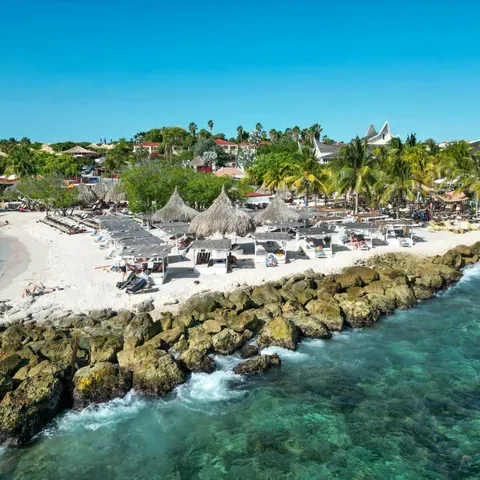
From Blockchain to Beach House: Can You Buy a Home in Curaçao with Bitcoin?
Crypto in Curaçao? Buying a luxury villa or seaside apartment with Bitcoin once seemed like a plot from a sci-fi film. Yet, from Miami to Dubai, this once-futuristic concept is fast becoming reality. As of 2025, more than 659 million people worldwide use cryptocurrency. That’s about 1 in 13 individuals. Gallup notes that about 14% of American adults now own some form of digital currency. At the same time, the global real estate landscape continues to evolve. High-net-worth individuals and international investors are eying digital assets to snap up prime properties. In July, Christie’s International Real Estate revolutionized the luxury real estate market by becoming the first major US brokerage to launch a dedicated division for cryptocurrency-based property transactions. Aaron Kirman, CEO of the Christie’s Southern California luxury boutique brokerage based in Los Angeles, opened the division with a bang, rolling out a $1 billion portfolio of ultra-luxury properties accepting digital currency. “This is the moment crypto wealth meets tangible luxury,” Kirman said. “Traditional real estate has been way too slow to embrace the crypto revolution that I’ve seen close deals for years.” <h2>The Global Crypto Real Estate Surge</h2> Crypto keeps making waves in the international property market, becoming more mainstream. In 2021, a Miami penthouse sold for $22.5 million in crypto, setting a new benchmark. More recently, the Dubai Land Department (DLD) signed a Memorandum of Cooperation with Crypto.com. One goal is to create new ways to invest in virtual real estate. Platforms like RealOpen and BaanCoin let buyers use Bitcoin, Ethereum, or stablecoins like USDT to buy properties worldwide. Deals can close in a day, skipping slow bank transfers and hefty fees. Blockchain makes sure transactions are safe and easy to track, and smart contracts can cut out middlemen. But the crypto craze is not all rosy. Crypto’s volatility is a major hurdle. Bitcoin’s dramatic price swings can shift a property’s cost within hours. And the rules are still unclear. While countries like the UAE and Portugal welcome crypto with clear laws or tax breaks, others impose strict capital gains taxes or outright bans. <h2>The Case for Crypto</h2> Speed and efficiency: A crypto transaction can be settled in minutes, not weeks — a big plus for international investors who want to avoid cross-border wire transfers and fees. Global reach: Cryptocurrency is borderless. A Canadian investor can buy a property from a seller in Curaçao without the hassle of converting currencies and dealing with the complex international banking system. Innovation and transparency: Blockchain creates a clear and unchangeable record of all sales. It can streamline title transfers and reduce the potential for fraud. <h2>The Counter-Argument</h2> Market volatility: The value of cryptocurrencies like Bitcoin can fluctuate wildly, sometimes dropping or surging by double-digit percentages in a single day. Regulatory uncertainty: The legal framework for crypto is still in its infancy in many parts of the world. Regulations are inconsistent and subject to change. Skepticism and adoption barriers: Many traditional real estate professionals, sellers, and financial institutions remain wary of a technology they don’t fully understand. Finding a seller who will accept a digital asset instead of local currency can be challenging. <h2>A New Era of Stability — The US GENIUS Act</h2> On July 18, 2025, President Donald J. Trump signed the Guiding and Establishing National Innovation for US Stablecoins Act of 2025 (GENIUS Act) into law. The GENIUS Act creates a regulatory framework for stablecoins. Stablecoins are cryptocurrencies pegged to a real-world asset like the US dollar. The GENIUS Act establishes rules for companies that issue stablecoins, ensuring they are backed by sufficient reserves and follow specific licensing and reporting requirements. While the GENIUS Act is a US law, its impact is global. By creating a clear, regulated pathway for digital assets, it should accelerate their adoption in international commerce. Crypto is poised to move from niche to mainstream. For an international market like Curaçao, the rise of a stable digital currency could be a game-changer. <h2>What Does Crypto Mean for Curaçao?</h2> Curaçao has all the right ingredients to become a leader, not just a participant, in the crypto-friendly luxury market. A proactive government: Curaçao’s government is already in the game. It’s working to create a clear and solid set of rules. The country is part of the Kingdom of the Netherlands and operates under a distinct legal and financial framework. Visionary banking: The Central Bank of Curaçao and Sint Maarten (CBCS) recognizes the potential of crypto but also understands the need for caution to prevent risks like money laundering and fraud. A track record of innovation: Curaçao has a long history as a financial hub and a pioneer in the online gambling sector. Appealing tax policies: The lack of a capital gains tax is a powerful draw for real estate investors. You won’t find a “Bitcoin accepted here” sign at every local real estate office in Curaçao. But brokerages like Palmstone Real Estate recognize the need to provide innovative solutions to their global clientele. Palmstone is a pioneer in using property technology — PropTech — to redefine real estate. This combination of government support, tax advantages, and hands-on local expertise bridges the gap between crypto innovation and traditional real estate practices. Global rules for crypto and real estate are changing at an astonishing pace, creating new paths for forward-thinking brokerages and their clients. With its turquoise waters, tax policies, and desirable lifestyle, Curaçao is a prime candidate to lead the Caribbean’s crypto-friendly luxury market.
From Second Home to Smart Investment: How Luxury Vacation Properties in Curaçao Are Becoming Sources of Passive Income
The line between second home and investment is slowly but surely fading. Today’s high-net-worth buyers are seeking out homes that double as assets. And in the Dutch Caribbean island of Curaçao, that is exactly what they are purchasing. Luxury vacation properties on the island deliver strong personal value and solid financial returns. For this reason, more buyers are opting to rent out their homes when they’re away. With the right setup, one property becomes both a retreat and a revenue stream. Global demand for upscale short-term rentals is climbing. Travelers want privacy, more space than a hotel, and are willing to pay for it. What’s Happening in Curaçao? Tourism in Curaçao is exploding. In the last year alone, stayover tourism rose by 18%, and North American arrivals increased by 24%. There are more flights and better infrastructure, which means more visitors across seasons. These visitors need places to stay, and luxury rentals – especially in desirable neighborhoods like Jan Thiel – are seeing high occupancy. Here are the numbers: Gross rental yields: average 8–12% in the high-end segment. Occupancy rates: 50–88%, depending on location. Top performer: Jan Thiel leads with the highest average occupancy. Even mid-season, demand remains strong, and with tourism growth projected to continue through 2025 and beyond, the long-term outlook is highly favorable. What Drives Value? Location The island sits safely outside the hurricane belt, with direct flights from North America and Europe arriving daily. Buyers looking for ROI should prioritize walkability to beaches, restaurants, and attractions, since these microlocations fetch higher Airbnb rates and reduce vacancy between stays. Proximity to nightlife is attractive for younger guests, but privacy near the shoreline remains the gold standard. Design Travelers pay more for contemporary interiors, outdoor kitchens, poolside decks, and clean architectural lines. Properties with biophilic, bohemian, or Scandinavian styles are valued 50% higher or more. Flexible layouts matter: a minimum of three bedrooms plus three baths with an open-plan living area is often ideal for families or groups. Service Level The guest experience makes or breaks rental success. Five-star reviews boost visibility, raise pricing power, and keep occupancy high in shoulder months. Partnering with a strong rental manager is critical, since guests expect effortless check-ins and fast responses, plus quick resolution of maintenance issues. How to Balance Personal Use with Profit Pick your weeks early: block your personal stay in advance, as peak weeks go fast, so your property manager can optimize the rest of the calendar. Keep it turnkey: guests want a stocked kitchen, beach towels, clear instructions, and assistance when needed. Price smart: let data drive your nightly rates with dynamic pricing tools that adjust based on seasonality and local events. Lean on local experts: Palmstone Real Estate offers advisory services for owners who want maximum return without headaches and can connect you with a reliable rental management team. Reinvest the returns: once cash flow starts, many owners scale by buying a second or third property in Curaçao, amplifying returns and flexibility for personal use. Ready to Start? Whether you’re looking for a quiet beachfront escape or a revenue-generating villa with full rental occupancy, Palmstone Real Estate is here to help. With deep knowledge of the Caribbean luxury real estate market, they help you make the right move at the right time. Let’s build a lifestyle that pays you back – get in touch today.
The Impact of International Politics on European Investment Climate and Caribbean Real Estate
Global markets are not what they were five years ago. In fact, they’re not what they were last year. Historically, investors have looked to Europe as a bastion of stability. But watching the region navigate geopolitical tensions and the resulting ripple effects has forced them to reconsider their options. The war in Ukraine has deepened economic fractures, with the US and EU drifting apart on everything from defense spending to trade policies. Plus, Trump is back in office, and US support for Ukraine is wavering. Europe has been left to shoulder more of the financial burden, and budgets are feeling the strain. In this climate, more capital is being routed toward stable regions. Thanks to a booming real-estate market and investor-friendly policies, the Caribbean is a compelling alternative. The EU-US Rift Over Ukraine Geopolitical tensions are nothing new, but the growing divide between the EU and the US over Ukraine is becoming one of the most consequential in recent history. What began as a united front against Russian aggression is now unraveling. From Unity to Divergence At the start of the war, the US and EU stood in lockstep. They imposed sanctions and delivered billions in aid (which Donald Trump has now halted). Under the Biden administration, the US took the lead—organizing military support and funneling funds into Ukraine’s defense. Europe was a little slower to act but committed financial and military resources—all the while facing economic fallout. But Donald Trump has returned to the Oval Office. The president’s skepticism toward continued US involvement in Ukraine reached a fever pitch during Ukraine President Volodymyr Zelenskyy’s disastrous visit to the White House in March 2025. Trump’s response sent shockwaves through Europe (and the world). Sanctions and Trade Tensions Sanctions were supposed to weaken Russia, but in reality, they hit Europe just as hard. Energy shortages, inflation, and economic uncertainty have left investors questioning whether the strategy is worth the cost. For example, between 2010 and 2020, the Dutch TTF gas price hovered around €20 per MWh, but by March 2022, it had risen sharply to €345 per MWh—an all-time high. France allocated €45 billion between 2022 and 2023 to shield households from soaring energy costs. What’s more, US-EU trade tensions are escalating. Trump’s tariffs and protectionist policies will strain economic relations further, and the EU will be forced to reduce its reliance on US economic ties. Why Investors Are Looking Elsewhere Investors want stable and predictable opportunities, but Europe is unable to deliver. So they are looking elsewhere, and here’s why. Inflation and Economic Instability The war in Ukraine has pushed European markets into prolonged volatility, where inflation continues to spiral on an upward trajectory due to ongoing energy disruptions and supply chain issues. Consumer inflation in Ukraine rose from 10% in early 2022 to a peak of 26.6% by October of that year. Germany, France, and Italy have all seen inflation rise too, this time driven largely by energy costs. Stagflation—a dangerous mix of economic stagnation and high inflation—could take hold if energy prices remain unstable. High Military Budgets and Investment Concerns As the US winds back its foreign policy priorities, European nations are forced to rethink defense spending. A stronger defense is crucial for regional security, but it also stretches national budgets thin. Germany, for example, has pledged to increase defense and infrastructure spending to €1 trillion over the next decade. This kind of financial reallocation raises red flags for investors who want to see economic stability, not escalating military expenditures. Capital Flight Foreign direct investment (FDI) into Europe declined by 7% in 2023, leaving more capital to flow toward stable and high-growth markets—including the Caribbean. The Caribbean Becomes More Attractive to Global Investors The Caribbean’s strong economic fundamentals are drawing increasing interest from those looking to hedge against European unpredictability. Political and Economic Stability Unlike Europe, which is experiencing growing political fragmentation, the Caribbean has remained relatively stable. Many Caribbean nations have strong economic ties to the US and Canada, which provide a level of financial security that investors find appealing. The Caribbean’s projected GDP growth for 2025 is 2.5%, an improvement over the stagnant 0.5% average recorded between 2010 and 2019. The broader Latin America and Caribbean (LAC) region is also expected to grow at 2.5% in 2025—offering consistent, moderate growth potential. Tax Benefits and Business-Friendly Regulations Several Caribbean nations have minimal corporate, capital gains, and inheritance taxes, which makes them attractive tax havens for high-net-worth individuals and businesses. The Cayman Islands, for example, impose a 0% corporate tax rate as long as businesses pay an annual license fee. Caribbean Luxury Real Estate and Tourism Growth Tourism is back in full force, and the Caribbean real estate market is feeling the effects. Luxury beachfront properties are in high demand, and investors are paying attention. Tourism in the Caribbean is forecast to expand at an annual rate of 5.3% between 2024 and 2029, surpassing pre-pandemic levels. Comparing Investment Opportunities For investors weighing their options, here’s how the two regions compare: Volatility vs. Growth European real estate has long been considered a safe bet. Recently, it’s become more volatile due to inflation and economic instability. In contrast, the Caribbean’s property market is experiencing steady growth. Between 2019 and September 2024, prices per square foot for prime secondhand villas in the Caribbean increased by 41%. Mainstream properties saw a 26% rise. Remote Work and Digital Nomad Incentives Europe’s rising living costs and stricter tax policies have made long-term property investments less attractive. At the same time, Caribbean nations are rolling out digital nomad visas and residency programs, so it’s easier for professionals to relocate and invest in real estate. What’s Next for Investors? Predictions suggest that Europe’s investment climate will remain volatile for the foreseeable future. Inflation, energy insecurity, military spending, and rising tension will continue to challenge economic stability. Some investors may find niche opportunities in defense or renewables, but risk perception remains high. The Caribbean’s investment appeal is growing. High-net-worth individuals and institutional investors turn to the region as a safe haven. Looking ahead, as beachfront property becomes scarcer, interest in more secluded, undeveloped Caribbean areas could lift. This will likely drive further real estate demand. Diversify Your Investments Diversification is more important than ever. For long-term financial security, it’s time to look beyond the usual investment hubs and explore emerging, stable markets like the Caribbean.
How Trump’s Presidency Could Shape Investor Behavior in Caribbean Luxury Real Estate
Donald J. Trump strode back into the White House on January 20, 2025, and immediately began rearranging the world. He signed 26 executive orders on his first day in office, more than any other president in history. One of those executive orders was to rename the Gulf of Mexico. That means the Caribbean Sea, home of the island paradise of Curacao, is no longer connected to the Gulf of Mexico. Now the Caribbean Sea flows into the Gulf of America. And that’s just for starters. The Republic of Colombia’s northern border is the Caribbean Sea. The country is one of America’s closest allies. Less than a week into his presidency, Trump sent two US planes carrying deported migrants to Colombia. Colombia refused to let them land because the planes were military, not civilian. Trump immediately said he would impose 25% tariffs and a travel ban, and revoke the visas of Colombian government officials. Hours later, Colombia backed down. In short, after Trump’s first week in office, one thing we can count on is more surprises. How Could Trump’s Presidency Shape Investment Policy in the Caribbean Luxury Real Estate Market? The luxury real estate market in the Caribbean has long been an attractive destination for investors seeking high-end properties, whether for personal use, rental income, or as a hedge against economic fluctuations. The presidency of Donald Trump, known for his real estate background and dramatic impact on US and global economic policies, could have significant effects on this complicated market. Let’s break it down. The Caribbean The Caribbean isn’t just one country or island. It’s a region made up of many islands, archipelagos, and countries surrounding the Caribbean Sea. Starting in the 16th century, various European powers sailed into the Caribbean and colonized different islands. They left a complex legacy of language, culture, and legal systems that vary from island to island. The Kingdom of the Netherlands The Kingdom of the Netherlands is made up of four countries. On the European continent, there is the country called the Netherlands. The other three countries — Aruba, Curacao, and Sint Maarten — are far across the Atlantic Ocean in the Caribbean Sea. Make America First Trump often complains about the US trade deficit with the European Union. But not with the Kingdom of the Netherlands. In 2023, the United States exported $116.9 billion in goods and services to the Netherlands, while importing $54.4 billion. The US trade surplus with the Dutch was $62.5 billion. That makes the Netherlands America’s trading partner with the highest trading surplus. Luxury Real Estate Investing in Curacao Curacao is a Caribbean island country with its own constitution. It relies on the Kingdom of the Netherlands for foreign policy and defense but has significant autonomy. Today, Curacao delivers a vibrant culture and a burgeoning tourism industry. It has world-class beaches with snorkeling and scuba diving right off the shore. Colorful Dutch architecture and historic museums reflect the unique character of Willemstad, its capital and UNESCO World Heritage site. Curacao ports are vital for the island’s economy, handling both cargo and cruise ships with Dutch expertise. Curacao is also a financial center, with low taxes that attract international businesses. Curacao is south of the Caribbean hurricane belt and is rarely threatened. The Curacao International Airport (CUR) connects the island to major cities all over the globe, including a daily nonstop flight from Amsterdam. There are no restrictions on foreign buyers acquiring real estate in Curacao. Residents of Curacao can apply for Dutch citizenship after living there for five years as part of the Investor Permit Program with a minimum investment of $280,000. Dutch citizenship opens up a whole other world. You get European Union citizenship benefits, including the right to live and work anywhere in the EU. It offers an alternative for US citizens and other globetrotters who could use another passport — no matter who is in the White House. Policy Continuation and Economic Strategy Trump’s reelection promises policy continuity, focusing on deregulation, tax reforms, and pro-business initiatives. For Curacao, this could mean enhanced investment opportunities. Continued or expanded tax incentives similar to those seen in the US like pass-through deductions and like-kind exchanges might encourage more American investors to look towards Curacao. The island’s stable economy and Dutch legal system make it attractive for those looking to leverage such benefits outside the US. The Caribbean Guilder, Curacao’s New Currency Until recently, Curacao used the Netherlands Antillean Guilder (ANG), pegged to the US dollar at approximately 1.79 to 1 USD. The new currency, the Caribbean Guilder (XCG), is set to replace the ANG on March 31, 2025. Only two countries will use the XCG: Curacao and Sint Maarten, the Dutch side of the island of Saint Martin (the other side is French). The new currency represents a step towards a distinct cultural identity for Curacao and Sint Maarten. Donald Trump’s presidency could influence the Caribbean guilder in several speculative ways: US Dollar Policy: Trump’s policies on the US dollar, such as interest rate adjustments or trade policies, could affect the value of any currency pegged to it. If Trump’s administration pursues policies that strengthen the dollar, this could boost the XCG. For investors, a strong US dollar might make Caribbean properties more affordable for American buyers but less so for those with currencies weakening against the dollar. Investment Climate: Trump’s economic policies could either encourage or deter foreign investment in the Caribbean region. A favorable US investment climate might lead to more capital flowing into Curacao and Sint Maarten. More capital could bolster the new currency’s acceptance and value. Limited Direct Impact: Curacao and Sint Maarten, and the Centrale Bank van Curacao en Sint Maarten (CBCS) govern the new Caribbean guilder. The US President’s actions would have an indirect effect on a small regional currency. The success of the XCG would largely depend on local governance, economic management by CBCS, and regional economic conditions. Will Trump’s Presidency Stimulate Luxury Real Estate Investing? Donald Trump’s presidency could stimulate investor behavior in the Caribbean luxury real estate market through a complex web, including: Economic policies Political stability Currency impacts Personal brand influence Immigration policies Infrastructure development While some investors might see opportunities in a robust US economy or favorable tax policies, others might be wary of the political and economic volatility that could accompany his administration. The Caribbean, known for its allure as a luxury haven, must navigate these influences carefully to maintain or grow its appeal among the global elite looking for prime real estate investments. At Palmstone Real Estate, we can guide you through the elements that make investing in Curacao an intriguing prospect. Contact us if you want to diversify your portfolio in a market that combines luxury with a stable, welcoming environment.
Caribbean’s Record-Breaking Sales: Landmark Deals That Redefined Island Luxury
The Caribbean has long been a playground for the world’s elite. Renowned for its laidback lifestyle, endless array of private beaches, and lush landscapes, it’s no wonder the region hosts some of the most opulent properties ever sold. For high-net-worth individuals seeking more than just a tropical getaway, these remarkable transactions set the benchmark for exclusivity, privacy, and luxury. Here, we take a closer look at three record-breaking Caribbean property sales that continue to captivate the imagination of the ultra-wealthy. Prince’s Turks and Caicos Estate—Sold for $10.8 Million In a fitting tribute to the late pop legend Prince, his six-acre beachfront estate in Turks and Caicos made waves when it sold for $10.8 million in 2019. Purchased by Prince in 2011, the star expanded his Caribbean retreat over the years by acquiring two adjacent properties, creating a sprawling sanctuary on the island’s northern coast. Known for its purple-hued driveway and an extravagant home theater draped in purple velour, the estate is a striking reflection of the artist’s eccentric style. The buyer was North Carolina businessman Tom Barnes—a lifelong fan of the pop icon. Barnes vowed to maintain many of Prince’s original touches, including the signature purple driveway, and described how surreal it felt to own the property of an artist he had idolized as a teenager. David Copperfield’s “Islands of Copperfield Bay”—Purchased for $50 Million When it comes to private island and luxury real estate ownership in the Caribbean, few rival the legendary magician David Copperfield, who owns 11 islands in the Exuma chain of the Bahamas. These aren’t just any islands—Copperfield spent five years and an additional $40 million after buying them to transform the properties into the epitome of luxury. He succeeded in turning his Caribbean domain into a private haven for some of the world’s most famous personalities, including Oprah Winfrey and Bill Gates. The main island, Musha Cay, is the crown jewel of the “Islands of Copperfield Bay” and can be rented for around $60,000 per night. Spanning over 700 acres, it boasts five meticulously designed guest houses, a theater, and extravagant amenities such as private beaches, world-class dining, and a 30-person staff. Copperfield originally bought Musha Cay in 2006 for $50 million, and extensive remodeling has pushed the property’s value to new heights. Johnny Depp’s Private Island in the Bahamas—Purchased for $3.6 Million In 2004, Hollywood star Johnny Depp purchased Little Hall’s Pond Cay in the Bahamas for $3.6 million. Situated in the pristine Exuma archipelago, the 45-acre island offers a blend of white-sand beaches and lush tropical foliage. For Depp, the island became a personal retreat where he could escape the Hollywood spotlight and enjoy a quiet life with family and friends. Inspired by his work on Pirates of the Caribbean, he designed the island to emphasize privacy and seclusion. It features six private beaches, each named after people close to him, including his children Lily-Rose and Jack, and former partner Vanessa Paradis. While the original purchase price of $3.6 million may seem modest compared to today’s soaring ultra-luxury property values, it is the emotional value and bespoke design that make the island truly unique. When Depp’s marriage to Amber Heard deteriorated, the island was reportedly sold within minutes for $75 million. For high-net-worth individuals, these transactions illustrate how an island or signature property can serve as both a personal sanctuary and a powerful symbol of glamour and success.
Investing in Paradise: Top Real Estate Opportunities for Those Looking to Invest in the Caribbean
The Caribbean Region offers more than just lovely beaches and vibrant culture. For savvy investors, it is a thriving market with many real estate opportunities. Foreign investments increased by 119% since 2020, reaching 193 billion dollars in 2023. This remarkable growth, as noted by Dona Regis-Prosper, Secretary-General and CEO of the Caribbean Tourism Organization (CTO), is no coincidence. It signals a strong interest in the region’s luxury beachfront properties, vacation rentals, and commercial real estate. For those seeking a second home or looking to maximize returns, the Caribbean has become a prime area for profitable real estate investments. Here are some reasons why. The Appeal of the Caribbean Caribbean islands are renowned for their natural beauty and warm climate. However, it is the economic benefits that draw international investors. A growing number of people are seeing the Caribbean as a stable and gainful region for real estate. The influx of tourists boosts demand for rental properties. That makes it an ideal location for businesses and individuals who want to enter the vacation rental market. The opportunities in this sector keep expanding, presenting excellent investment prospects. High-End Residential Properties Investors who are interested in prime residential properties will find a wide range of options across the Caribbean islands. Gorgeous oceanfront villas and modern condominiums cater to international buyers. A lot of these impressive properties are situated in gated communities, which provide privacy and security. Purchasing a second home in the Caribbean allows for personal use while also offering the possibility of generating income through short-term rentals. Benefits of Investing in Luxury Homes Investing in luxury beachfront properties offers numerous advantages. They often appreciate in value over time and provide a nice, solid return on investment. Moreover, they attract affluent buyers and renters, so you can always count on high occupancy rates. This stability makes them an appealing choice for people who would like to invest. Many of the Caribbean islands have developed infrastructure to support tourism, ensuring ongoing demand for these premium properties. The Growing Vacation Rental Market The vacation rental market in the Caribbean is experiencing considerable growth. Travelers increasingly prefer the privacy and comfort of rental properties over traditional hotels. It is a trend that creates substantial opportunities for investors to capitalize on rental income. High-end villas and condos located near popular tourist areas are especially in demand. Lots of islands, including Curaçao and Barbados, have put in systems to help property owners manage and market their rentals well. Commercial Real Estate Opportunities Beyond residential properties, the Caribbean also has potential in commercial real estate. The region’s expansion in tourism and hospitality industries has generated a demand for business spaces like hotels, resorts, and restaurants. Investors can find opportunities in office buildings, retail spaces, and mixed-use developments. Islands like the Bahamas and the Cayman Islands offer a steady environment for commercial investments, attracting businesses and entrepreneurs. Favorable Tax Benefits One very attractive aspect of investing in the Caribbean is the favorable tax climate. There are islands that provide specific tax benefits to encourage foreign investment. These benefits may include no capital gains tax and no inheritance tax, as well as lower property taxes for overseas buyers. In addition to these advantages, certain islands make available residency or citizenship options through real estate investing. That means you can enjoy long-term benefits in the region. Sustainability and Eco-Friendly Investments Sustainability has become more and more important in the Caribbean’s real estate market. Properties built with eco-friendly materials or designed to minimize environmental impact are gaining popularity. Buyers nowadays want homes that have solar energy systems, rainwater harvesting, and other green technologies — features that benefit the environment and also cut energy costs. Sustainable properties appeal to buyers and renters who prioritize eco-conscious living. Curaçao: A Prime Investment Destination Among the Caribbean islands, Curaçao stands out as a top destination for real estate investment. Its Dutch-based legal system offers transparency and security for foreign buyers. The island’s stable economy and growing tourism industry make it a good location for people shopping for residential and commercial real estate. Because it is located outside the hurricane belt, the risk of property damage is low. That is attractive to businesses and individuals who want to invest long term. Additionally, Curaçao offers tax benefits and residency through real estate investment. The Role of Palmstone Real Estate Palmstone Real Estate connects international buyers with premium real estate in Curaçao and across the Caribbean Region. Our portfolio has vacation homes, luxury beachfront properties, and commercial real estate for various investing goals. We provide custom advisory services to help clients get the best returns while enjoying the benefits of Caribbean property ownership. Palmstone’s commitment to excellence is clear in every interaction, so you feel supported throughout your investment journey. Why the Caribbean Is a Smart Investment Choice Investing in the Caribbean presents a unique opportunity for those looking to diversify their portfolios. The region’s beauty, growing economy, and favorable tax climate make it a great destination for both residential properties and commercial real estate. The continued growth in the vacation rental market further increases the potential for profitable investments. As the Caribbean continues to evolve, those who invest in this paradise can reap the benefits for many years. Are you interested in real estate opportunities in the Caribbean? Palmstone Real Estate is here to assist you. Contact us today to learn how we can help you secure a valuable investment in the beautiful region.
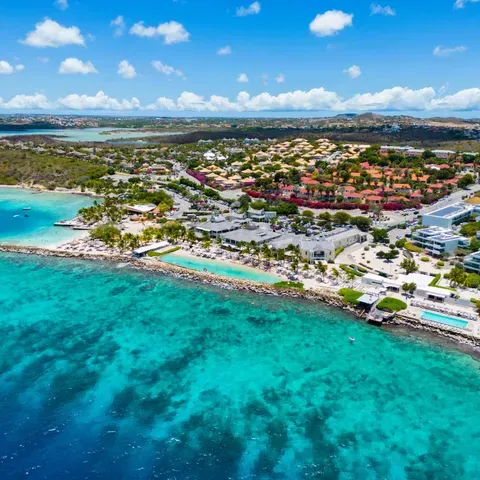
What is Up and Coming?
Curacao Property Market Overview The beautiful island of Curacao attracts people from all over the world. Located in the southern Caribbean Sea, it combines a beautiful natural environment with a vibrant lifestyle and dynamic community. If you want to experience a slice of this paradise for yourself, there are lots of fantastic real estate opportunities to be found. The luxury property market is bustling in Curacao, with overseas buyers getting to enjoy a unique location and high standard of living. Let’s step inside the Curacao market and see what this amazing place has to offer. Buying real estate in Curacao has never been this easy. Property market overview Before we dive deep into specific locales, it’s important to view the island as a whole. As an independent country within the Kingdom of the Netherlands, Curacao has long attracted overseas interest. People come from everywhere, with buyers from the USA, Europe, and Latin America well represented. Buyers typically come in three groups, with plenty of overlap between these categories: Tourism is growing in Curacao, and many buyers are searching for vacation homes. This group often rents out their property when it’s not in use. Some people simply want to retire in Curacao. This group is attracted to the idyllic landscape and relaxed lifestyle of the island. The third category of real estate buyers are purely investors. This group generates rental income from short-term stays, with long-term rentals also possible. Foreigners can purchase property in Curacao, with the Government of Curacao welcoming investment from overseas. There are no restrictions on foreign buyers, who enjoy the same rights as Curacao citizens. Foreign buyers have access to freehold property or lease land, which is a common method of property ownership on the island. Under this arrangement, property is leased from the government in exchange for an annual fee. Foreign buyers don’t need to become residents, and many parts of the island allow tourist rentals. Let’s take a look at popular Curacao neighborhoods and resorts to see how they compare: Jan Thiel Jan Thiel is a desirable location located 8 km southeast of Willemstad. Built around a salt lake and nature reserve, the wider Jan Thiel Bay area is home to luxury hotels, modern villas, and Caribbean homes. This part of the island has been a big favorite among Dutch tourists for decades, including Vista Royal, Boca Gentil Resort, and adjacent areas in the older part of Jan Thiel. Jan Thiel is well-equipped with facilities — locals and tourists enjoy the beach and salt flats alongside beach clubs, restaurants, gyms, spas, and boutique shops. There are plenty of accommodation options, from luxury hotels to villa and apartment accommodation. Vista Royal Resort and Boca Gentil Resort are two great communities. While only the latter is a gated resort, both environments are safe for permanent residents and holidaymakers. As one of the most developed locations in Curacao, Jan Thiel is packed with real estate opportunities. Demand is high, and there is lots of potential for growth. Jan Thiel has some of the most luxurious properties in Curacao, but you can still find bargains at 500,000 dollars or lower. Holiday rentals are permitted throughout Jan Thiel, which makes this area ideal for investments. Santa Barbara Santa Barbara is a private beach in the southeast of the island. It was originally the property of a mining company, before being purchased by Hyatt Regency. Management of the resort was then passed to Benchmark Resorts and Hotels in 2013, with Sandals Royal Curacao Resort stepping in to upgrade the facility post-COVID-19. Development of the new Sandals resort is underway, with hundreds of new rooms being built along the Spanish Water Bay and Caribbean Sea. With more than 400 tradesmen employed during the construction period and over 800 full-time employees needed by the hotel, Santa Barbara is likely to experience more growth in future years. This will help to stimulate demand for housing and push prices higher. Along with the resort itself, this beautiful locale features a gated community and several modern amenities. Whether you’re staying for a few days or retiring here for good, you can enjoy Santa Barbara’s golf course, restaurants, swimming pools, spa, and ice cream shop. The beach and resort offers fabulous views of the marina, and it’s accessible to the public with an entrance fee. Property prices in Santa Barbara vary widely, from around 250,000 dollars to more than 4 million dollars. Brakkeput The Landhuis Brakkeput area was originally a plantation. From the early 18th century, livestock and produce helped to feed local residents. Buildings sprung up to house locals, with these same buildings now functioning as accommodation and restaurants for Curacao’s guests. Today, the Brakkeput area is a peaceful residential neighborhood close to Jan Thiel and Spanish Waters. The name Brakkeput or Brakke Put means “spring with brackish water”. Brakkeput Mei Mei means “in the middle” in the local Papiamentu language, and Brakkeput Ariba and Brakkeput Abao refer to historical country houses. This area includes a diverse array of amenities, from supermarkets and stores to bars, restaurants, and a casino. There are multiple beaches and resorts nearby, and the center of Willemstad is just 15 minutes away. There are also lots of real estate opportunities in the Brakkeput area, which features a diverse array of properties in multiple price brackets. Unlike some parts of the island, you can still find properties here well under 500,000 dollars. Blue Bay Blue Bay Golf & Beach Resort is one of the premier beach and golf resort communities in Curacao. It’s a stunning beachfront location with lots of great amenities, making it popular with international property buyers. There are lots of apartments dotted in and around the Blue Bay area, with houses also periodically hitting the market. Many apartment complexes include basic services, from housekeeping and gardening to laundry, car rental, and airport transfers. This makes it ideal for overseas holiday buyers, who can even access activity bookings and babysitting services. Whatever type of property you desire, Blue Bay combines stunning natural beauty with luxurious living for an unmatched quality of life. Prices vary considerably here based on location and amenities, from just over 500,000 dollars to well over 1 million dollars. Santa Martha Santa Martha began as a sugar plantation in 1830, before it became the largest salt producer on the island. The area was purchased by the government in 1937, with a desire to transform the plantation into a model farm called Helfirchdorp. While this project was a failure, it laid the groundwork for future development. Many years later in 1995, the estate was restored to its original condition. It was recently transformed into a boutique hotel and restaurant, under the name Landhuis Klein Santa Martha. Modern-day Santa Martha combines a beautiful beach with lots of lifestyle facilities. Playa Santa Martha is a public beach on the bay with stunning azure water. There are lots of accommodation options nearby, both surrounding the bay and in the surrounding towns. Soto is a small town on the other side of the lagoon, Barber is a little further to the east, and Lagun lies on a stretch of coast to the north. The construction of the TUI BLUE Curaçao hotel in Santa Martha, which began in June of this year, is well underway. This highly anticipated resort will feature 300 rooms and is expected to open its doors in the first quarter of 2026. Santa Martha offers the perfect location with its authentic surroundings and proximity to one of the most beautiful beaches in the Caribbean. The development of the hotel is in the hands of the Vogels and Van Alstede families. The Van Alstede family, known for developing TUI’s office building in Willemstad, is overseeing the construction aspect of the project, while the Vogels family—hoteliers behind well-known establishments like Avila Beach Hotel and Lions Dive—will manage the hotel operations. The new hotel is set to provide a significant boost to the island’s tourism industry. It is expected to create over 400 jobs and represents an investment of 80 million dollars. This will not only provide a new source of employment but also promote sustainable development in the Bandabao region. Moreover, the resort is expected to attract not only guests from the Netherlands but also international vacationers from other countries besides the Netherlands. This exciting development is likely to draw more tourist accommodations to the area and create opportunities for the growth of luxury real estate and other tourist properties. Cas Abou Cas Abou Beach lies 5 km from Santa Martha, on the southwest coast of Curacao. Also known as Bon Bini Beach, after the TV series made there, it’s a popular spot with locals and tourists alike. There are lots of facilities, with visitors getting access to secured parking, restrooms, showers, and lockers. The beach also features a bar and restaurant, and there’s even a dive shop for all the snorkeling lovers. This part of Curacao has lots of great property options. Buyers can choose between modern houses, affordable villas, and luxury penthouses. The Cas Abou Resort offers coastal views, with many houses offering breathtaking 360-degree views of the sea below. Residents of the resort have free access to Cas Abou Beach and the private beach cove within the grounds. Unlike many gated communities on Curacao, Cas Abou Resort allows property owners to rent out to tourists. The Palmstone advantage At Palmstone, we specialize in Curacao’s upscale housing market. Our portfolio showcases an exquisite collection of villas, apartments, and prime building plots situated across the island. We deal with enchanting places and help people to embrace new opportunities. Beyond property acquisition, our services include investment advisory, purchase facilitation, rental management, and property valuation. Please reach out to learn more about Curacao and all its luxury real estate opportunities.

Island Hopping: Getaways from Curacao to Nearby Havens
Curaçao — Your Gateway to the Caribbean and Top Travel Destinations Beyond the thriving street art, beautiful nature (including over 35 beaches!), world-famous blue-colored eponymous liqueur, and the dushi lifestyle it’s known for, Curaçao also connects you to the rest of the Caribbean and other top travel destinations. Unmatched Connectivity Curaçao’s enviable location in the southern Caribbean makes it easy to travel to nearby destinations. The island boasts an extensive array of direct flight connections, especially if you’re looking to explore the rest of the region. From the Curaçao International Airport (aka Hato Airport), you can hop on a plane and find yourself basking in the beauty of Aruba, diving in the crystal-clear waters of Bonaire, or dancing to the lively rhythms of the Dominican Republic. The island’s impressive connectivity extends well beyond the Caribbean as well, as there are direct flights to cities like Panama City, Bogotá, Miami, and even New York. Exploring Nearby Caribbean Islands Imagine waking up in your luxurious Curaçao villa and deciding that today is the perfect day for a quick getaway. With direct flights from Hato Airport to neighboring Caribbean islands, you can go on trips to: Aruba: Here, you can explore more pristine beaches (e.g., Eagle Beach), enjoy world-class shopping, and experience the lively nightlife Aruba is known for. Bonaire: Enjoy unforgettable adventures beneath the waves at Bonaire, with its vibrant coral reefs and abundant marine life. Dominican Republic: Besides being known as a great place for surfing and other fun waterside activities, the Dominican Republic also offers rich cultural experiences, particularly in the Ciudad Colonial. Sint Maarten: Immerse yourself in the unique blend of Dutch and French cultures on the island of Sint Maarten (Saint Martin). Here, you can enjoy gourmet dining, upscale shopping, and breathtaking views of white-sand beaches. Jamaica: Other than its reggae rhythms, stunning landscape, and historic sites, there are many reasons to put Jamaica on your Caribbean travel bucket list. Trinidad and Tobago: Choose between exploring the bustling capital of Port of Spain in Trinidad or relaxing on the tranquil beaches of Tobago. You can also make a day of it and do both. City Trips Beyond the Caribbean Curaçao’s impressive connectivity isn’t limited to trips elsewhere in the Caribbean. You can also enjoy air travel services to the most exciting cities in the Americas and the Netherlands. Panama City: Go on a quick escape to Panama City, which is a mere two-hour flight from Curaçao. Here, you can visit the historic Casco Viejo district and the iconic Panama Canal. Bogotá: Venture a bit further to Bogotá, Colombia to enjoy its museums, historic landmarks, and lively markets. Make sure to include the famous Gold Museum in your itinerary and take a cable car ride to Monserrate for stunning city views. Miami: In about three hours, you can find yourself in the heart of Miami, where you can enjoy luxury shopping and taking in the city’s thriving art scene. New York: Craving some fine dining after watching a show on Broadway? You can take a trip to the Big Apple with a four-to-five-hour flight from Curaçao. You can also go for a relaxing walk to Central Park and visit the Statue of Liberty. Toronto: Hop on a direct flight to Toronto and experience Canada’s largest city with its iconic CN Tower, Kensington Market, and Distillery District. Amsterdam: Visit world-class museums, like the Rijksmuseum and the Van Gogh Museum, and the picturesque canals of the Dutch capital of the Netherlands with a direct flight to Amsterdam. If you’re looking for more compelling reasons to make Curaçao your second home or to invest in property here, the unmatched connectivity this island nation offers makes it a truly attractive option either way.

The Influence of Technology on Luxury Real Estate in 2024
Technology is the central pillar of the booming Caribbean luxury market, which is projected to reach a staggering $1.82 trillion valuation for residential properties alone this year. PropTech is streamlining transactions and enhancing property quality through innovative digital connections . Top Technology Trends for 2024 The luxury sector is undergoing a massive shift driven by seven key innovations: AI & Machine Learning: These tools provide predictive analytics for smarter investment decisions and automate asset valuation using satellite imagery . VR & AR Showcases: International buyers can now explore properties through immersive virtual walkthroughs, making global real estate more accessible . Blockchain Security: By utilizing smart contracts, blockchain minimizes fraud risks and simplifies high-value international transactions without the need for traditional intermediaries . Smart Living and Connectivity Modern luxury villas in Curaçao now feature integrated smart home systems for automated climate and security control. Furthermore, dedicated real estate apps and advanced CRM systems ensure a seamless customer journey, offering bespoke experiences and real-time market insights to tech-savvy investors worldwide .

Celebrities Who Have Made the Caribbean Their Second Home
Discover the Charms of Caribbean Living: A Haven for the Stars Welcome to the world of Caribbean luxury living! For those seeking a second home retreat or a lucrative investment opportunity, the Caribbean stands as a haven of exclusivity and allure. Among those who have succumbed to its magnetic pull are some of the world’s most renowned celebrities, drawn to its beauty, laid-back living, and undeniable charm. One such luminary who has found solace in the Caribbean is none other than Barry Hay, the iconic lead singer of the Dutch rock band Golden Earring. Nestled in the heart of Curacao, Hay’s Caribbean abode reflects his penchant for luxury and serenity. With sweeping views of the Caribbean Sea and lavish amenities at his disposal, Hay’s retreat serves as a testament to the unparalleled lifestyle that the Caribbean offers. Joining Hay in the ranks of Caribbean aficionados is Robbert van de Corput, professionally known as the globally acclaimed DJ Hardwell. His passion for music is matched only by his love for the sun-kissed shores of Curacao. Amidst the pulsating beats of his chart-topping hits, Hardwell finds respite in the tranquil ambiance of his Caribbean sanctuary fitted with his very own high-tech studio. But the allure of the Caribbean extends far beyond the shores of Curacao, captivating the hearts of celebrities from across the globe. From the pristine beaches of Barbados to the secluded enclaves of St. Barts, the Caribbean beckons with its natural tropical charm and exclusivity. Oprah Winfrey, media mogul and philanthropist extraordinaire, has made the island of Antigua her Caribbean sanctuary. Located within the prestigious confines of Jumby Bay, Winfrey’s Caribbean home epitomizes elegance and utmost privacy. With its secluded beaches, lush landscapes, and world-class amenities, Winfrey’s retreat is a haven of comfort, luxury, and tranquility. Renowned Hollywood actor Johnny Depp is among the elite few who have made the Caribbean their home away from home. Nestled on a private island in the Bahamas, Depp’s lavish 45-acre ranch-style estate includes solar-powered homes, a lagoon lined with palm trees, and six beaches. Sir Richard Branson, the visionary entrepreneur and founder of the Virgin Group, owns two Caribbean islands. Set amidst the idyllic splendor of Necker Island in the British Virgin Islands, Branson’s private retreat is the epitome of Caribbean living. He also owns all 125 acres of Moskito Island, which features a collection of 10 private estates. Three estates, including Sir Richard’s own 11-bedroom mansion, are available for rent. Own a Piece of the Caribbean Today! Investing in Caribbean property presents a unique opportunity to not only secure your own piece of paradise but also to reap substantial financial rewards. With its beautiful beaches, vibrant culture, and unrivaled beauty, the Caribbean continues to beckon with its promise of a life less ordinary. It’s a magnet for tourists from around the globe as well, ensuring a steady stream of rental income for property owners. The region’s favorable tax laws and incentives also make it an attractive destination for investors seeking to diversify their portfolio. So, whether you’re looking for a second home to escape the hustle and bustle of city life or aiming to capitalize on the bustling tourism industry, investing in Caribbean property offers both a luxurious lifestyle and lucrative returns. Come join the ranks of the stars and discover the allure of Caribbean living for yourself. Connect with us at Palmstone Real Estate. With over 20 years of experience in international real estate, we can help you find the perfect property that aligns best with your lifestyle and investment goals.

Mastering the Art of Negotiation: Securing the Best Deal for Your Luxury Home
Acquiring a high-end residence in Curaçao involves a sophisticated negotiation process. Mastering this phase is the key to ensuring that you secure your dream property at a fair price, allowing you to redirect funds toward premium home enhancements . Research and Professional Expertise Thorough due diligence is the cornerstone of any real estate transaction. Buyers must analyze local market dynamics, property tax assessments, and the structural condition of the home to establish its true market value . Leveraging the network of a seasoned real estate agent provides a competitive edge, as they can identify potential deficiencies and use them as leverage to negotiate a lower sales price before the deal is finalized . Strategic Communication and Closing Successful negotiators understand the psychology of the sale. It is important to remain composed and avoid appearing overly eager, as this can signal to the seller that you are willing to pay a premium . Setting the tone with a strong first offer and skillfully navigating counteroffers ensures that both parties reach a mutually beneficial agreement. Remember, negotiations continue until the final contract is signed, covering everything from closing costs to specific contingencies .
Curaçao: The Hidden Gem in the Caribbean for Real Estate Investors
While luxury destinations like the Bahamas and Saint Martin have long commanded premium prices, Curaçao has emerged as a high-potential alternative for savvy real estate investors. The island offers a sophisticated investment climate paired with more accessible entry points than its regional neighbors . Strategic Advantages of the Island Curaçao provides several unique safeguards that make it a standout choice in the Caribbean market: Location Safety: Situated outside the hurricane belt, the island offers a safer environment for property investments, significantly reducing the risks associated with natural disasters . Legal and Fiscal Stability: As part of the Kingdom of the Netherlands, Curaçao boasts a strong legal framework and investment-friendly policies, including tax incentives for international property owners . Market Maturity: Unlike the saturated markets of Aruba, Curaçao’s real estate sector still offers significant room for capital appreciation as global interest continues to rise . Booming Tourism and ROI The island’s tourism industry is experiencing a record-breaking surge, with a diverse international visitor base that fuels consistent demand for high-end vacation rentals. In 2023, visitor numbers grew by 18% compared to the previous year, ensuring lucrative rental yields for property owners . This growth, combined with the island's world-class healthcare and rich multicultural lifestyle, makes Curaçao the perfect location for both investment and retirement.
Important Things to Pay Attention to When Purchasing a Home in Curaçao
Een woning kopen is een belangrijke beslissing, vooral als u zich op een nieuw eiland bevindt. Als u van plan bent om een woning op Curaçao te kopen, zijn er verschillende belangrijke zaken waar u op moet letten. In dit artikel bespreken we enkele van de belangrijkste overwegingen voor het kopen van een woning op Curaçao.
The Curaçaose Beleggingsvennootschap (CBV): Benefits for Real Estate Investors
The Curaçaose Beleggingsvennootschap (CBV) provides a sophisticated and flexible framework for managing real estate investments. Its favorable legal structure makes Curaçao a premier destination for investors aiming to optimize their global portfolios while ensuring asset protection . Tax Efficiency and Growth The CBV offers distinct financial advantages that can significantly boost the profitability of property investments: No Capital Gains Tax: In Curaçao, capital gains realized from the sale of real estate through a CBV subsidiary are exempt from taxation . Income Stability: Real estate held within a CBV provides a steady stream of rental income and long-term potential for capital growth . Access to Capital: By pooling resources, a CBV enhances its creditworthiness, making it easier to secure financing from major financial institutions for new acquisitions or developments . Security and International Reach Asset protection is a cornerstone of the CBV, as it allows for a clear separation between personal wealth and corporate investment assets. This "ring-fencing" mitigates risks associated with property-related liabilities . Additionally, the CBV serves as a strategic gateway for cross-border transactions, helping investors navigate the regulatory requirements of multiple international jurisdictions with ease .
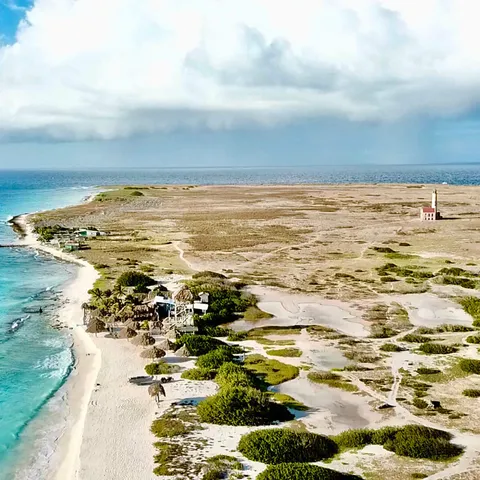
Klein (“Little”) Curaçao: A Hidden Gem in the Caribbean
Located off the southeastern coast of the main island, Klein Curaçao is an uninhabited tropical outpost that spans just 1.7 square kilometers. It is a destination where time seems to stand still, offering visitors a serene escape characterized by endless white sands and turquoise waters . Maritime History and Landmarks The island’s most recognizable landmark is its historic pink lighthouse, originally built in 1850. Despite its abandoned state, it offers a hauntingly beautiful glimpse into the island's past . On the windward side, the coastline serves as a graveyard for several shipwrecks, providing a stark and powerful reminder of the ocean's strength and the island’s strategic maritime position . Underwater Wonders Klein Curaçao is widely regarded as one of the best spots for marine exploration in the Caribbean: Sea Turtles: The island is a protected nesting ground for green and hawksbill sea turtles, which are frequently spotted by snorkelers . Pristine Diving: Because of its remote location, the coral reefs are exceptionally healthy and teeming with vibrant marine life . Tranquility: Without permanent residents or large-scale development, the island remains an unspoiled sanctuary for nature lovers . Experience the ultimate "castaway" feeling with a professional boat charter. Contact us for recommendations on the best day trips to this hidden gem.
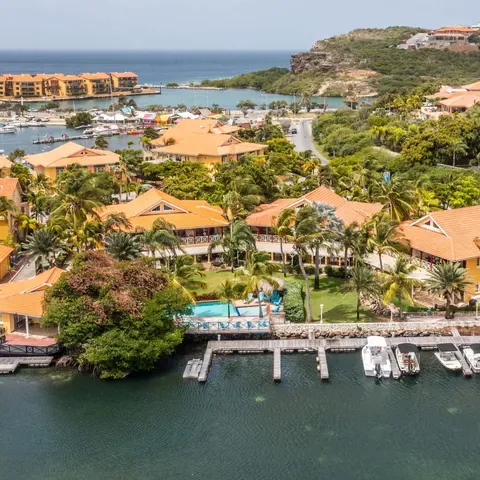
Americans Have Discovered Curaçao: A Tourism Explosion
Curaçao’s international fame has reached a boiling point, with a massive surge in visitors from the United States and Canada. The share of international holidaymakers jumped from 20% to 30% in 2022, signaling a permanent shift in the island's tourist demographics . Global Hotel Chains Leading the Way Major American hospitality brands are fully capitalizing on this new demand: Marriott & Hilton: The renovated Marriott Beach Resort and the upcoming "The Riff" in collaboration with Hilton are specifically designed to meet the high standards of North American travelers . Sandals Royal Curaçao: This luxury resort has been a game-changer since its opening, significantly increasing the island's visibility in the US market. Pyrmont Hotel: Scheduled for completion in late 2025, this 300-room hotel in the historic Pietermaai district will integrate monumental buildings into a modern luxury concept. The Unique Appeal of the Island While travelers were once attracted mainly to the beaches of Aruba or Barbados, they are now choosing Curaçao for its authentic culture and European-Caribbean history. The island offers a unique blend of vibrant entertainment, world-class dining, and—most importantly for American tourists—a high level of safety . With over 1,500 new hotel rooms entering the market, the current growth trend is expected to develop exponentially, cementing Curaçao’s position as a premier global destination.
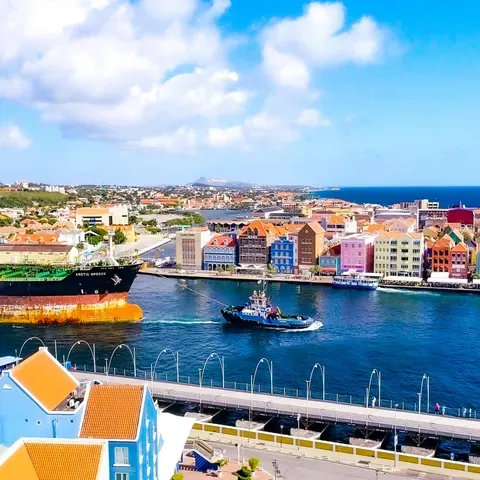
Willemstad, Capital City of Curaçao: What to Expect?
Willemstad is the vibrant and colorful capital of Curaçao, located in the southern Caribbean Sea. Known for its stunning Dutch-inspired colonial architecture and lively atmosphere, it is a must-visit destination that perfectly blends European history with Caribbean flair . Iconic Landmarks: Punda and the Queen Emma Bridge The historic district of Punda is famous for its bright, candy-colored buildings along the waterfront. Visitors can spend hours wandering through narrow alleys filled with boutique shops and cafes. Connecting Punda to the district of Otrobanda is the Queen Emma Bridge, a unique floating pontoon bridge that swings open to allow ships into the harbor. At night, the bridge lights up, creating a magical scene perfect for a seaside stroll. History and Nightlife in Pietermaai Cultural explorers should not miss the Kura Hulanda Museum, which offers a profound look into the island’s heritage and the history of the slave trade. For a more relaxed experience, head to the Pietermaai District. Often referred to as the "Quartier Latin" of Curaçao, this historic area is home to iconic spots like Mundo Bizarro and offers a sophisticated yet bohemian nightlife experience right by the ocean.

Tax Benefits with Investing in Real Estate on Curaçao: How Can I Benefit from the SPF?
Real estate investment on the Dutch Caribbean island of Curaçao offers more than just stunning views; it provides a robust framework for tax optimization. The local tax system is designed to welcome foreign capital, notably featuring the absence of capital gains tax on property sales. Strategic Advantages of the SPF The Private Foundation (Stichting Particulier Fonds or SPF) is a versatile legal entity widely used by international investors to hold and manage real estate. Key benefits include: Corporate Tax Exemption: Income generated through the SPF, such as rental returns, is exempt from corporate profit tax as long as the activities remain within the scope of asset management. No Dividend Withholding Tax: Since Curaçao does not levy a dividend tax, distributions to beneficiaries are highly efficient. Asset Protection: By separating real estate assets from your personal estate, the SPF provides a shield against external financial risks and legal liabilities. Privacy and Succession Planning The SPF is also a cornerstone of sophisticated estate planning. It allows owners to designate beneficiaries directly, bypassing standard statutory inheritance laws. Furthermore, the names of the beneficiaries are kept confidential, offering a level of privacy not available in most other jurisdictions. Typically managed by a local trust company, the SPF ensures that your investments are handled with professional oversight. As with any international investment, seeking expert advice is recommended to maximize the benefits of the SPF structure for your portfolio.
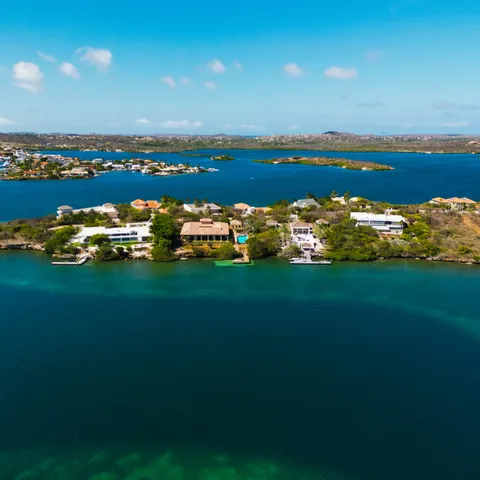
Capital Return on Your Real Estate in Curaçao: Identifying Growth Markets
When reviewing the average value development of real estate in Curaçao over the past decade, the general residential market shows a relatively stable and steady trend. However, significant value appreciation is found in a specific niche: tourist-oriented real estate. The Rise of Tourist Real Estate Curaçao is increasingly becoming the preferred holiday destination for global travelers. With double-digit growth in arrivals from Europe and a surging interest from North and South America, the demand for high-quality holiday rentals is reaching new heights. Leading the charge are prime locations like Jan Thiel and the Vista Royal district. Your expected return on investment (ROI) is primarily driven by two key factors: Occupancy rates: The percentage of the year your property is booked. Average nightly rates: The price premium travelers are willing to pay for top locations. Management and Operations To maximize your capital return, you must consider operating costs and management style. You can choose the level of involvement that suits you: Full Outsourcing: Professional firms handle everything from technical maintenance to guest check-ins and cleaning. Self-Management: Many owners choose to handle commercial bookings themselves via Airbnb or Booking.com while outsourcing on-site logistics. The strong price appreciation within this sector is a direct result of the high rental yields currently achievable in these tourist hotspots. Do you have questions about the exploitation possibilities of a vacation home in Curaçao and the returns you can achieve? Contact our team today for a no-obligation consultation.
Tax Advantages When Investing in Curaçao
Investing in Curaçao offers significant tax-friendly benefits for international investors. A key vehicle for this is the Private Foundation (known locally as the Stichting Particulier Fonds or SPF), introduced in 1998. This unique legal entity is specifically tailored for capital investment and asset protection. How the Private Foundation Works The SPF differs from a regular foundation in several important ways: Investment Focus: An SPF can hold and invest capital, including real estate and interests in other legal entities, provided it does not engage in active commercial business. Profit Allowed: Unlike traditional foundations, the SPF is permitted to generate a profit from its investments. Flexible Distributions: There are no distribution restrictions. The individual who transfers assets to the SPF can make distributions to themselves or their family members. Tax Exemption and Estate Planning The most compelling advantage is that the SPF is fully exempt from corporate income tax. Furthermore, it serves as an excellent tool for estate planning. Unlike an American trust—which is a legal relationship—the SPF is a separate legal entity that holds legal ownership of all contributed capital. This allows for seamless transitions of wealth, where the usufruct (the right to enjoy the assets) remains with the contributor or designated beneficiaries. To ensure total privacy and compliance, SPFs are typically established and managed by professional trust companies. If you are interested in the tax advantages of investing in Curaçao, we are happy to provide further information or put you in direct contact with our expert legal and financial partners.
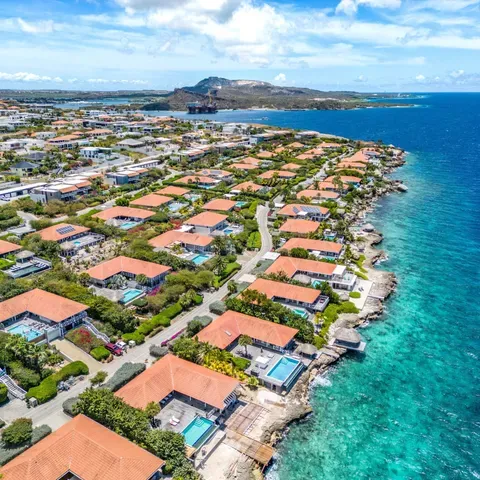
Vista Royal: The Place to Be for the Best Investment Proposition on Curaçao
Curaçao is rapidly gaining international traction, and nowhere is this more evident than in Vista Royal. The data is clear: over the past 12 years, prices for villas and plots in this area have increased by an average of 10% annually, without a single interim price drop. Explosive Capital Growth In the last two years, this growth has accelerated significantly: Villas: Average increase of 15-25% per year. Building Plots: Average increase of a staggering 40% per year. This surge is fueled by a growing scarcity of available plots combined with record-breaking tourist occupancy. While Jan Thiel has long been the top choice for 80% of Dutch visitors, the global market is now catching on. A Rising Caribbean Star Curaçao’s fame is currently exploding among American and Canadian travelers. Currently ranked among the 30% most affordable Caribbean destinations, the island is expected to move into a higher price bracket soon. For savvy investors, this transition promises: Higher nightly rates for rentals. Increased annual rental income. Continued appreciation of real estate value. Your Expert in Jan Thiel Palmstone Real Estate is the market leader for buying and selling touristic real estate in Jan Thiel, particularly in the prestigious Vista Royal area bordering Jan Thiel Beach. Owning a villa here isn't just a smart financial move with guaranteed returns—it also secures your own (cost-free) tropical getaways. When will you board? Our team is ready to provide you with expert advice and guidance.


