Your window to Curaçao's Finest Real Estate
the signature collection
We’ll open the doors , You’ll write the chapters

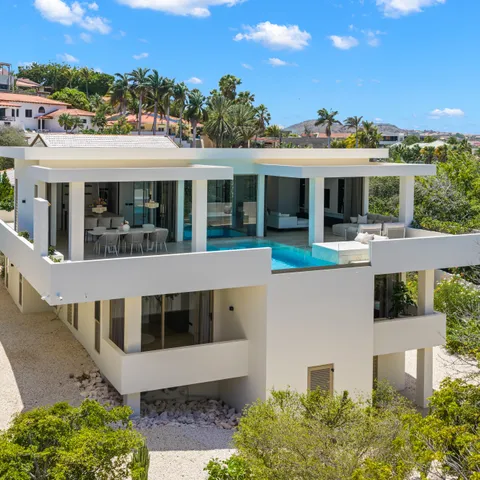
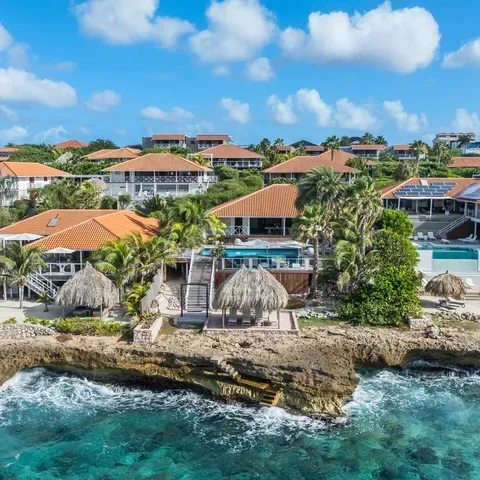
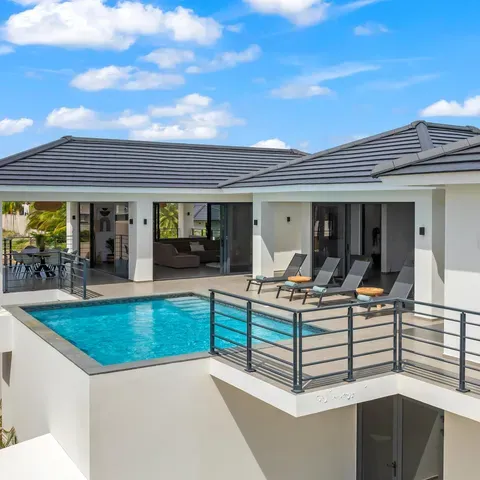
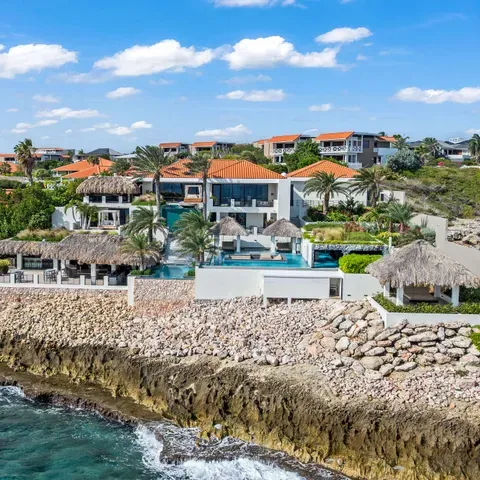
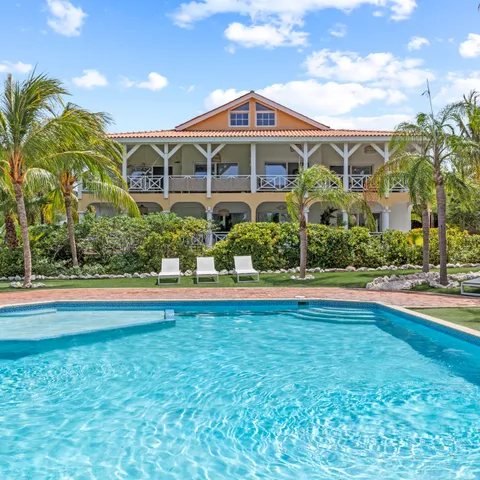
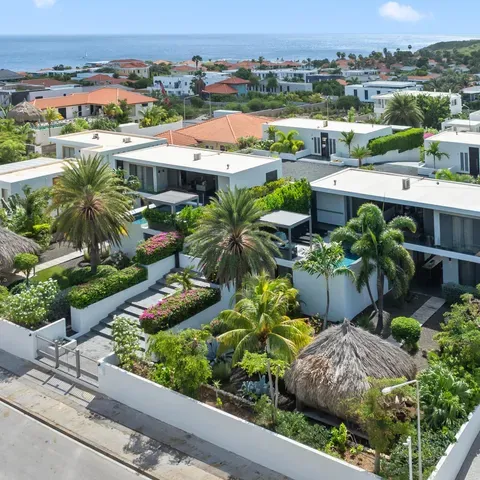

About Palmstone Real Estate
The international specialist in Curaçao real estate
Palmstone Real Estate has over 20 years of experience in the international real estate market. We were founded on the vision that the luxury real estate market in Curaçao needs a professional and transparent approach. We therefore stand for openness, integrity, and responsibility. We take the time to truly understand your portfolio and ambitions. Thanks to a combination of local and international experience, we know our way around the high-end market in Curaçao perfectly. This gives us access to the most exclusive properties, often before they are publicly advertised.
We offer all the expertise you need under one roof. We guide you through the entire process of purchasing your new home or plot, but we are also available to assist you with the sale of your current property on the island. In addition, we provide advice on investing in Curaçao and setting up a profitable operating model. Finally, we can mediate in the renting of your home. We are therefore a true all-round expert, and our specialist knowledge makes us the most distinctive real estate agent on Curaçao.

What our customers say
Experiences
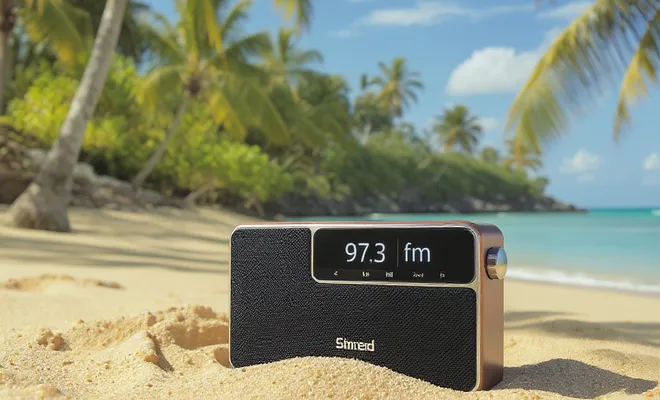
Where luxury meets paradise
The sound of the brand
Listen to a brief overview of Curaçao’s most exceptional brokerage. Discover the dedication and extraordinary mastery that define Palmstone Real Estate as we guide you through the island’s most prestigious residential markets.
Palmstone Real Estate. Where luxury meets paradise!
Meet the team
We make real estate personal

Investing in real estate on Curaçao
Curaçao is a versatile destination in the beautiful Caribbean region. Popular as a vacation destination, but certainly also as a real estate investment. As an experienced real estate agent on Curaçao, we understand that you are looking for certainty. Our team consists of academically trained specialists, including lawyers and economists. We use our knowledge and experience to support you throughout the entire purchase, sale, or rental process.
We focus specifically on the most sought-after neighborhoods on the island. Think of the lively Jan Thiel with the incredibly popular Jan Thiel Beach, and the luxurious villa neighborhood Vista Royal. Also in our portfolio are homes in prestigious resorts such as Boca Gentil, Blue Bay and Coral Estate. These locations not only offer stunning views and the highest living standards, but are also very attractive for tourist rentals.
Our personal assistance
At Palmstone Real Estate, we offer the best service with a dedicated, full-service approach that always prioritizes your unique investment goals. Our team draws on over two decades of international experience to ensure every transaction is handled with complete transparency and integrity.


Our personal assistance
At Palmstone Real Estate, we offer the best service with a dedicated, full-service approach that always prioritizes your unique investment goals. Our team draws on over two decades of international experience to ensure every transaction is handled with complete transparency and integrity.

Together with trusted partners, delivering custom solutions at the highest level
Partners
Magazine
Stay ahead of the game
The penshonado scheme: a tax-friendly retirement in Curacao
By Niels van Vliet, Palmstone Real Estate Curacao luxury real estate specialists, over twenty years of international experience | Last updated: September 2026 For international buyers over fifty, Curacao offers more than turquoise water and year-round sunshine. The penshonado scheme can turn the island into one of the most attractive places to hold foreign income, provided you own the right property and meet a specific set of conditions. The rates, thresholds and conditions below are drawn from Curacao's tax authority and specialist advisors, sourced at the end of this article. Where we describe how Palmstone itself works with buyers, that reflects our own practice rather than a published source. Rules can change and every situation is different, so treat this as a starting point and confirm your own position with a qualified tax advisor. The scheme is a long-standing arrangement for people aged fifty and over who move to the island and receive income from abroad. Under the right conditions, that foreign income is taxed at a flat rate of 10 percent [1]. For a Dutch pension, an American retirement account or income from foreign property, the difference compared with regular progressive rates, which run up to roughly 46.5 percent on Curacao-source income, can be substantial [2]. What the scheme actually offers The penshonado scheme comes in two forms, and you choose the one that suits your situation. In the first, your actual foreign income is taxed at a flat rate of 10 percent. In the second, you declare a fixed notional foreign income of XCG 500,000 and pay the ordinary progressive rate over that amount, regardless of how much you actually received [1]. Retirees with more modest foreign income tend to prefer the flat 10 percent route, while those whose real foreign income comfortably exceeds XCG 500,000 often prefer the capped, fixed option. Switching between the two is not fully symmetric. If you start on the flat 10 percent rate, the law only lets you move to the fixed option after three years [1]. There is also a treaty point worth knowing: choosing the flat 10 percent rate keeps the double-taxation protection under the tax arrangement between the Netherlands and Curacao (the BRK), while opting for the fixed notional income gives up that protection [1]. Switching back from the fixed option to the flat rate may be possible sooner; confirm the current timing with your tax advisor before relying on it. The conditions you need to meet The scheme is generous, but it is built around a clear set of requirements. To qualify you must: Be fifty years of age or older at the time you register in Curacao. Have lived outside Curacao for at least sixty consecutive months before moving. Submit a request to the Inspector of Taxes within two months of registering in the population register. Own a home for your own use on Curacao worth at least XCG 450,000 within eighteen months of registration. This property may not be rented out, with one exception: a protected monument of at least XCG 450,000 may be rented for up to four months in any twelve-month period [1]. Refrain from local employment, a local profession or other local work. If you are married, the same applies to your partner. Two narrow exceptions exist: holding an employment relationship with a Curacao company in which you hold at least 40 percent of the shares, direct or indirect, or serving on the supervisory board of a Curacao-resident entity [1]. The property requirement is where the scheme and the real estate market meet. Your qualifying status depends on owning a home of the right value, so the purchase is not only a lifestyle decision but a fiscal one as well. Which income qualifies Only income earned outside Curacao falls under the favorable rate. That includes pensions and income from former employment abroad, income from foreign property, interest on foreign bank balances and claims, dividends from foreign companies and periodic payments from a foreign debtor [1]. Income earned on the island itself is taxed at the normal progressive rate. A few things to keep in mind The penshonado scheme lowers your income tax, but it does not remove your social contributions. You remain liable for premiums such as basic health insurance and, depending on your age, old age insurance [1]. Losing the qualifying home for more than six months, or filing incomplete or late returns for two consecutive years, can also end your entitlement [1]. None of this is difficult to manage, but it is worth planning for from the start. Choosing between the two forms A quick way to think about which route fits your situation: Option | Tends to fit | Trade-off Flat 10% on actual foreign income | Retirees with more modest foreign income | Keeps BRK double-tax protection; switching to the fixed option requires a three-year wait Fixed notional income of XCG 500,000 | Those whose real foreign income clearly exceeds that amount | Gives up BRK protection; confirm with a tax advisor whether switching back is possible for your situationTable 1: Flat rate versus fixed notional income Discuss it with Palmstone Real Estate The penshonado scheme rewards good preparation, and the home you buy sits at the center of it. As the international specialist in luxury property on Curacao with more than 20 years of experience, Palmstone Real Estate helps you find a residence that meets the value threshold and fits the life you have in mind, from the villas of Vista Royal to the resort living of Boca Gentil and Coral Estate. Our purchase your property service covers this guidance from the first viewing to the notary, and a valuation or appraisal report can help confirm a property meets the XCG 450,000 threshold before you commit. We work with trusted tax advisors and notaries so that your purchase and your penshonado application move forward together. If ownership structure is also part of your planning, our overview of the Stichting Particulier Fonds (SPF) covers when that structure fits alongside a penshonado move. And if the numbers around a purchase are your next question, our guide on buyer's costs on Curacao walks through transfer tax, notary fees and what else to budget. FAQ about the penshonado scheme Can I rent out my qualifying home at all? Generally no. The home you register under the scheme is meant for your own use. The one exception is a protected monument worth at least XCG 450,000, which can be rented out for up to four months within any twelve-month period [1]. Do I need a separate residence permit? Yes. The penshonado scheme is a tax arrangement, not an immigration status. You still need to register in the population register and hold a valid residence permit; the penshonado application runs alongside that process, not instead of it. What happens if I lose the qualifying home temporarily? A short gap is generally not fatal, but if you are without a qualifying home for longer than six months, your entitlement to the scheme can end [1]. If you are selling and buying, it is worth timing the transaction carefully. Can my spouse work locally while I hold penshonado status? No, not as a rule. The restriction on local employment applies to both spouses if you are married, with the same narrow exceptions around significant shareholding or supervisory board roles [1]. About the author This article is written by Niels van Vliet of Palmstone Real Estate, drawing on the firm's experience guiding international buyers, including retirees, through property purchases on Curacao. Palmstone Real Estate has more than 20 years of experience in the international real estate market and works with a team of economists, legal experts and tax advisors. A word on accuracy The rates, thresholds and conditions referenced above, including the 10 percent tax rate, the XCG 500,000 notional income figure, the XCG 450,000 property threshold and the qualifying conditions, were verified against the sources listed below at the time of writing. Tax rules can change, and your personal situation, including your nationality, income sources and marital status, affects how the scheme applies to you. This article is intended as general information and not as tax advice. Always confirm your position with a qualified advisor before relying on it. Sources 1. Belastingdienst Curaçao, official tax authority, "Penshonadoregeling," official description of the two forms of the scheme, all qualifying conditions including the monument rental exception, qualifying foreign income, employment exceptions, conditions under which entitlement lapses and social contribution obligations. 2. STERKin.com, fiscal advisory firm, "Fiscale aandachtspunten bij investeren in onroerend goed op Curaçao," progressive tax rates on Curacao-source income for comparison.
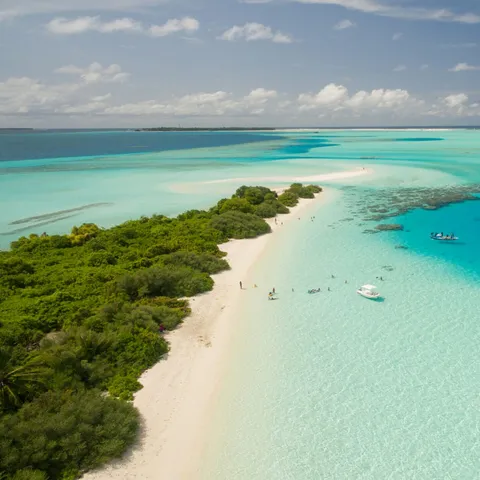
Buyer's costs on Curacao: transfer tax, notary fees and what else to budget
By Niels van Vliet, Palmstone Real Estate Curacao luxury real estate specialists, over twenty years of international experience | Last updated: September 2026 Before you fall in love with a villa in Vista Royal or an apartment on Spanish Water, it helps to know exactly what a purchase costs on top of the asking price. On Curacao these buyer's costs are transparent and set by clear rules rather than negotiation, and this guide walks you through every item you'll actually be billed for. The figures below are drawn from published transfer tax rules, the notary fee schedule set by the Joint Court of Justice and current turnover tax rates, all sourced at the end of this article. Where we describe how Palmstone itself works with buyers, that reflects our own practice rather than a published source. Rates can change, so treat this as a planning guide and confirm the exact numbers for your purchase with your notary. When you buy property on Curacao, the price on the listing is not the only figure that matters. As in the Netherlands, the buyer pays a set of one-time costs known as kosten koper. For most homes the total lands somewhere between roughly 5 and 6 percent of the purchase price or tax value, whichever is higher, and each part of it is fixed rather than open to negotiation. Transfer tax The largest single item is the transfer tax, or overdrachtsbelasting. On Curacao this is 4 percent of the purchase price, or of the property's tax value if that is higher, payable when ownership passes to you at the notary [1]. It is a one-time cost, and once it is paid the property is yours free of any further acquisition tax. On a purchase of USD 1,000,000, for example, you would budget around USD 40,000 for transfer tax. Notary fees The transfer of real estate on Curacao always runs through a civil law notary, who draws up the deed of transfer and, where relevant, the mortgage deed. Notary fees are set on a fixed scale by the Joint Court of Justice rather than freely negotiated, and typically fall between 1 and 2 percent of the purchase price [3][4]. The notary is an independent, neutral party who checks the title, confirms there are no outstanding claims and registers the transfer, so this is money spent on the security of your purchase. Land registry and additional charges Beyond tax and notary fees, a few smaller costs complete the picture: Land registry and stamp costs for recording the transfer at the Kadaster, currently a standard rate of around XCG 910 [4]. Turnover tax, or OB, currently 6 percent, charged on the notary's fee rather than on the property itself [2][4]. If you finance with a local mortgage, a separate mortgage deed and its registration, which typically add somewhere in the order of 0.5 to 1 percent of the loan amount to the notary bill [4]. A real estate agent's commission is normally paid by the seller, so as a buyer you do not usually carry that cost. Buyer's costs breakdown at a glance Putting the two main components side by side for a USD 750,000 property: Transfer tax: 4% of the purchase price or tax value, whichever is higher, around USD 30,000. Notary fees: 1 to 2% of the purchase price, fixed scale, USD 7,500 to 15,000. On top of that, a modest land registry and stamp cost, currently around XCG 910, plus turnover tax of 6% on the notary's fee, both minor next to the two items above. Total buyer's costs: roughly 5 to 6% of the purchase price, a realistic budget of around USD 37,500 to USD 45,000 on this example. A worked example Imagine a home priced at USD 750,000. You would set aside roughly USD 30,000 in transfer tax at 4 percent, somewhere between USD 7,500 and USD 15,000 in notary fees, and a modest additional amount for the land registry cost and turnover tax on the notary's work. All together the buyer's costs come to around 5 to 6 percent of the purchase price for a cash purchase, which means a realistic budget of roughly USD 37,500 to USD 45,000 on top of the price. Financing, currency movements and the specifics of your purchase can shift this, so treat it as a guide rather than a fixed quote. Which scenario fits your purchase Buyer's costs follow the same rules for everyone, but a few things change depending on how you buy. Buyer profile | What's different | What stays the same Cash buyer, existing home | No mortgage deed or related registration costs | Transfer tax, notary fee and OB as above Buyer financing with a local mortgage | A separate mortgage deed adds roughly 0.5 to 1% of the loan amount | Transfer tax and notary fee on the purchase itself New-build purchased 'vrij op naam' | Costs are typically already folded into the listed price | The same underlying tax and fee components Purchase through a company or SPF | Notary process and structuring differ; see the SPF overview below | Transfer tax still applies to the underlying propertyTable 1: Buyer profiles and what changes for them If a company or investment structure is part of your plan, our investing in real estate service covers how we support that from a cost and structuring perspective. Discuss it with Palmstone Real Estate Understanding buyer's costs early keeps a purchase calm and predictable. As an international specialist in Curacao's luxury property market with more than 20 years of experience, Palmstone Real Estate can walk you through a clear cost breakdown for a specific property before you make an offer, and introduce you to notaries and, where useful, tax and mortgage advisors we've worked with. Our purchase your property service covers this guidance from the first viewing to the notary. If you're also weighing how to structure the purchase, our overview of the Stichting Particulier Fonds (SPF) covers when that structure makes sense. For a broader look at what to check before you buy, see our guide on important things to pay attention to when purchasing a home in Curacao. And if you're weighing these upfront costs against what a property could return over time, our guide on capital return on your real estate in Curacao looks at what drives value growth on the island. FAQ about buyer's costs on Curacao Can buyer's costs be included in my mortgage? Sometimes, depending on the lender and how much of the purchase price you're financing. It's worth raising directly with your bank or mortgage advisor early in the process, since it affects how much cash you need on hand at the notary. Are there any exemptions from transfer tax? Yes, a narrow one. Protected monuments and properties in the historic city center of Willemstad can qualify for a transfer tax exemption [5]. This does not apply to most villas and apartments outside that designated area. Do buyer's costs apply the same way to building plots? Yes. Transfer tax and notary fees apply to real estate generally, so a building plot is treated the same way as a villa or apartment for the purposes of these costs. When exactly do I need to pay these costs? At the notary, when the deed of transfer is signed and ownership passes to you. The notary collects transfer tax and their own fee as part of that closing, so you'll typically wire the full amount, purchase price plus buyer's costs, ahead of the signing date. About the author This article is written by Niels van Vliet of Palmstone Real Estate, drawing on the firm's day-to-day experience guiding international buyers through the closing process on Curacao. Palmstone Real Estate has more than 20 years of experience in the international real estate market and works with a team of economists, legal experts and tax advisors. A word on accuracy The rates and fixed amounts referenced above, including the transfer tax percentage, the notary fee scale and the land registry cost, were verified against the sources listed below at the time of writing. These figures are set by law or by the Joint Court of Justice and can change, and the exact cost of a specific purchase depends on the property, its price and whether financing is involved. Always confirm the current figures with your notary and tax advisor before finalizing a budget. This article is intended as general information and not as tax or legal advice. Sources Overdrachtsbelastingverordening 1908 (P.B. 1908, no. 49), artikel 12, official Curacao legislation portal, current 4 percent transfer tax rate. Belastingdienst Curaçao, "Omzetbelasting," official tax authority page on turnover tax (OB), the 6 percent rate charged on services including notary fees. Landsverordening houdende nieuwe regels betreffende het notarisambt, official Curacao legislation portal, confirms notary tariffs are fixed by the Joint Court of Justice. Fung-A-Loi & Samandar Notarissen, Curacao civil law notary office, published tariff guidance for the specific 1 to 2 percent notary fee range, the XCG 910 land registry and stamp cost and mortgage deed registration costs. Overdrachtsbelastingverordening 1908, artikel 4 (as amended, P.B. 2016, no. 82), official Curacao legislation portal, transfer tax exemption for protected monuments.
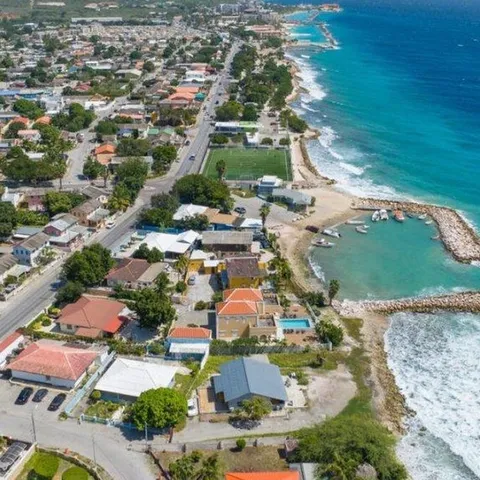
Curacao Is at a Turning Point. Here Is What That Means If You Are Buying Here
By Niels van Vliet, Palmstone Real Estate Curacao luxury real estate specialists, over twenty years of international experience | Last updated: September 2026 Three pieces of research and reporting have been circulating on Curacao this year, and they are not comfortable reading for anyone in our business. A carrying capacity study published in May 2026 by Sustainable Travel International and The George Washington University concludes that the island's infrastructure is at its limit [1]. A separate study on foreign investment finds that the residents surveyed believe, almost without exception, that international buyers are pricing them out [3]. And a market analysis by researcher Odile Micheletti, reported by Dick Drayer in August 2026, shows holiday rentals moving out of the resort zones and into ordinary residential neighborhoods, while supply grows roughly twelve times faster than occupancy [2][5]. We are a brokerage. The obvious commercial move would be to ignore all of this and keep publishing sunset photos. We are doing the opposite, for a simple reason: every one of these findings will affect what you own, what you can do with it, and what it is worth in ten years. You are better served knowing them now than discovering them after you sign. What the research actually says The environmental and infrastructure numbers are not ambiguous. The housing numbers, as you will see, are more contested. Curacao received more than 700,000 overnight visitors in 2024, about 50 percent more than in 2019. Projections put the island at approximately 1.5 million by 2030. That moves the visitor-to-resident ratio from 9.85 to nearly 15 visitors per resident per year [1]. The systems underneath that growth are already strained: Between 80 and 90 percent of the island's wastewater is discharged untreated into the sea [1]. The landfill has around 11 percent of its capacity remaining. Tourists generate about 3.5 times more waste per person than residents, and tourism-related waste is projected to double by 2030 [1]. Coral cover has declined by more than half in key areas. One third of the most popular tourist beaches are rated unsustainable in their current use [1]. The airport is at its operational ceiling, and the expansion currently planned is not sized for the 2030 projection [1]. Roughly 28,000 additional vehicles are expected on the island's roads by 2030 [1]. 58 percent of tourist spending leaves the local economy through imports and foreign-owned operators [1]. On housing, the picture is more contested but no less important. The island's stock of detached homes grew from just under 46,000 in 2011 to just under 50,000 in 2023, while affordability did not improve [7]. Note that this figure excludes apartments and condominiums, which is precisely where new construction and investor demand are concentrated. A 2026 study by Kristelie A. Isenia of the Inter-Continental University of the Caribbean, which received a research award from the Central Bank, surveyed 100 residents aged 15 to 64. It found near-consensus that foreign buyers push prices up (4.37 on a five point scale) and near-total disagreement that housing is affordable across income groups (1.56). The measurable statistical link between foreign investment and affordability, however, was weak: a correlation of 0.243, statistically significant at p = 0.015 but small in magnitude [3]. The honest reading is that the perception is far stronger than the proven causation, largely because Curacao does not systematically track how many homes are foreign-owned or how many have been withdrawn from the residential market into nightly rental. On a sample of 100 people, the strength of feeling is well established. The mechanism is not. The holiday rental market is growing faster than the demand for it This is the finding we would most want a prospective investor to read, and it has nothing to do with sustainability. It is a return warning. Odile Micheletti, who spent years working in property management on the island, analyzed data from Airbnb and market analyst AirDNA for a June 2026 report titled Vacation Rentals and Sustainable Tourism Development in Curacao. Her numbers: Curacao now has roughly 3,850 active holiday rental listings [2]. Supply grew 19.7 percent in a single year [2]. Average occupancy rose 1.7 percent in the same period, to around 66 percent [2]. Supply is therefore expanding about twelve times faster than the demand absorbing it [2]. Parts of the market are heading toward saturation. The consequence is not dramatic, but it is real: more properties competing for demand that is barely growing means increased competition between hosts, downward pressure on nightly rates, and thinner returns on properties in less attractive locations. The effect is not evenly distributed, and that is the whole point. Jan Thiel, with 336 listings, is the island's largest and most mature holiday rental market, with occupancy running between 55 and 83 percent and higher for some luxury villas [2]. Penstraat has 107 listings and Punda 150 [2]. On Penstraat, waterfront properties and those around the Avila Beach Hotel reach 85 to 90 percent occupancy, while properties a few streets inland sit considerably lower [2]. Micheletti concludes that the waterfront stretch in particular is approaching its ceiling: adding more holiday rentals there does not generate more visitors, it divides the same demand across more properties. Even within an established tourism zone, in other words, the difference between a good address and one two streets away is now measurable in occupancy rather than a matter of taste. The growth is in small units, not villas The AirDNA listing data behind the report shows active listings rising from roughly 2,100 in mid-2023 to around 3,800 by May 2026, an increase of 19.6 percent in the past year alone [2]. Broken down by size, the growth is overwhelmingly in one and two bedroom properties, which together account for roughly seventy percent of all listings on the island. Four, five and six bedroom properties have barely grown at all [2]. That distinction matters more than it first appears. One and two bedroom units are apartments, studios and annexes, which is precisely the housing stock that residents of Curacao depend on. Villas are not what is driving the displacement debate. The small units are. If you are considering a one bedroom apartment in a residential neighborhood as a rental investment, you are buying into the exact segment that regulation is being designed to address. Most listings earn very little The AirDNA revenue mapping in the report is the finding least likely to appear in a sales brochure, so we will state it plainly. Annual revenue per listing varies enormously across the island, and the distribution is not gradual. The properties in the highest revenue band cluster tightly in the established tourism zones, around Jan Thiel and the Willemstad waterfront. Across the residential neighborhoods inland, the overwhelming majority of listings fall into the lowest revenue bands, with a substantial number generating only a few hundred to a few thousand guilders per year [2]. In other words, a large share of the holiday rentals that have appeared in ordinary neighborhoods are not profitable enterprises. They are marginal ones. That is worth knowing for two reasons. It means the "just put it on Airbnb" return model is not supported by the actual data for most locations. And it means the properties generating genuine returns are concentrated in exactly the zones where holiday rental is uncontroversial. What this means for a buyer In a market where supply is outrunning demand, the average return falls while the return on genuinely good locations holds. Buying anything at all is no longer a strategy. Buying the right thing, in the right zone, is. The structural mechanism Research by Arjen Alberts on Aruba and Sint Maarten describes what the study calls a mandatory growth paradox: each new hotel requires staff, staff require immigration, immigrants require housing and services, and that in turn requires more growth to fund [4]. Housing pressure on a small island is not a side effect of tourism. It is built into the model. Why we are telling you this Because it changes what a good purchase looks like. For twenty years, buying on Curacao was a straightforward proposition: find something beautiful, buy it, enjoy it, rent it when you are not there. That era is closing. The carrying capacity study states plainly that the choices made in the next two years determine whether Curacao manages its growth or is managed by it. Either outcome reshapes the market. Neither leaves the current rules intact. We would rather you buy an asset that survives that transition than one that looks good until the rules change. Five things this changes for a buyer 1. Scarcity here is structural, and that supports value. Curacao is 444 square kilometers with a landfill nearly full, an airport at capacity, and a stock of detached homes that added roughly 4,000 units in twelve years [7]. Apartments and condominiums are not in that figure and have grown faster, so the constraint is tighter on land and villas than on apartments. But supply cannot respond quickly to demand, and the limits are physical rather than bureaucratic. For a long-horizon owner, that is the single most favorable fact in this entire report. It is also the reason the island cannot simply build its way out of the problem. 2. Registration and licensing of holiday rentals is now the consensus recommendation. This is worth stating carefully, because it is the single most consequential item on this list. Two independent pieces of research arrived at the same recommendation in 2026. Micheletti's analysis calls for a mandatory registration and licensing system for all holiday rentals: registration with the Chamber of Commerce and the tax authority, declaration of income, safety requirements, and rules covering noise, parking, waste, maximum occupancy and complaints [2]. The carrying capacity study, commissioned by the government of Curacao, independently recommends a regulatory framework for short term rentals built on registration, zoning and enforcement [1]. Neither is law today. But when a government-commissioned study and an independent market analysis converge on the same instrument, the direction of travel is not really in doubt. A separate 2026 study by Kristelie A. Isenia adds further proposals aimed at buyers: a higher tax rate for foreign purchasers, a levy on unused properties, and restrictions in particular market segments, alongside lower import duties on building materials and support for local first-time buyers [3]. Build this into your model as a probability rather than assuming today's conditions persist. A property whose entire return case depends on unrestricted nightly rental carries a policy risk you have not priced. A property that is compliant, correctly zoned and registered from day one carries almost none. 3. Location is no longer about the view. It is about which category the neighborhood falls into. This is the point we would most like buyers to absorb, and Micheletti's report makes it unusually concrete. She divides the island into areas where holiday rental fits and areas where it does not. Jan Thiel is her clearest example of the first category: the largest and most mature holiday rental market on the island, and a place where she considers holiday rental appropriate provided quality, safety and density are managed. The same logic applies to the other established resort and tourism zones [2]. Against that she identifies neighborhoods that were built for residents and should stay that way, naming Julianadorp, Santa Maria, Buena Vista, Suffisant, Brievengat, Jongbloed, Abrahamsz, Montana, Mahaai and Emmastad. She calls these Residential Stability Protection Zones and argues that permanent occupancy and long term rental should take policy priority there over further holiday rental growth. Two honest caveats. That designation has no legal status whatsoever. Micheletti is explicit that her boundaries are an analytical tool for spatial policy, not existing or statutory zoning, and that platform data changes constantly, making the report a snapshot of 2026. Her report also does not claim that holiday rental is already displacing residents on Curacao at scale. Her argument is that the effect is well documented in other destinations and that Curacao still has time to act before it becomes hard to reverse. But for a buyer the practical reading is simple. A property in an established tourism zone is doing what that zone exists for. A property in one of those ten neighborhoods is sitting in the area a researcher has explicitly flagged for protection, at a moment when both she and a government-commissioned study are recommending zoning and enforcement. When regulation arrives, it will not arrive evenly. Ask what the property is zoned for and which category its neighborhood falls into, not just what the previous owner was doing with it. 4. Waste water is the due diligence item almost no buyer asks about. Start with a fact that surprises most international buyers. Curacao has virtually no central sewerage. With the exception of a handful of neighborhoods, among them Julianadorp and Emmastad, properties across effectively the whole island rely on a cesspit or septic tank on their own plot. That is not a defect of the property you are viewing. It is the island standard. It also explains the figure quoted earlier. When 80 to 90 percent of the island's waste water is discharged untreated [1], that is not an abstraction about a municipal plant somewhere. It is the aggregate of thousands of individual systems on individual plots, including the one you are about to buy. So the question is not whether a property is connected. It usually is not. The questions that matter are: What system is on the plot, how old is it, and what is its capacity? How often does it need to be emptied? Emptying starts at around XCG 120 per service, roughly 67 US dollars at the pegged rate, and rises with volume. The annual cost is therefore driven almost entirely by frequency, which is driven by occupancy. How does the soil drain, and does the system struggle in the rainy season? How close is it to groundwater, a well, or the coast? Does the development have its own waste water treatment, or does every plot handle its own? This matters considerably more for a rental property than for a private home. A three bedroom house occupied by a couple places a modest and predictable load on a cesspit. The same house running at 70 percent occupancy with changing guests all year places a far heavier one. Emptying frequency goes up, cost goes up, and the risk of failure at the worst possible moment goes up with it. The arithmetic is simple enough to do on the back of an envelope. If a property in private use needs emptying a few times a year and the same property in year-round rental needs it several times more often, the difference is not large in absolute terms, but it is a recurring cost that appears in no listing and in almost no buyer's return model. There is a forward-looking reason to ask as well. If the island tightens waste water regulation, and both studies point toward tighter environmental enforcement, the compliance cost lands on the individual property owner rather than on a utility. A property with a modern, correctly sized system, or one in a development that handles treatment collectively, is not paying a luxury premium. It is holding a hedge. Then ask the ordinary questions too: water supply and what desalinated water costs at rental volumes, backup power, road access at peak season, and waste collection. For the full purchase checklist, see our article on important things to pay attention to when purchasing a home in Curacao. 5. Reef and beach quality are part of your asset, not the backdrop. If more than half the coral cover in key areas is gone and a third of the busiest beaches are rated unsustainable [1], then a villa whose value rests on the quality of the water in front of it carries a depreciation risk that does not appear on any valuation report. Properties near protected areas, in managed developments, or with less exposure to mass day-visitor pressure are positioned differently from properties that sit on the most crowded stretch of coast. What we will not do We will not help a client convert ordinary residential housing into nightly holiday rental. That is partly a matter of where we want to stand on an island where we live and work. It is also, plainly, commercial judgement, and the data supports it. That segment is the most exposed to a permit regime that two independent studies now recommend [1][2], it attracts the most local opposition, and according to the AirDNA revenue distribution it is where the weakest returns are concentrated [2]. It combines the highest policy risk with the lowest yield. We would rather place you in the zones where holiday rental is uncontroversial and where the revenue actually is. If you are looking for a broker who will tell you that none of this applies to you, we are not that broker. The window The carrying capacity study ends on one line that is worth repeating, because it applies to owners as much as to policymakers. The choices made over the next two years will decide whether Curacao manages its growth or is managed by it [1]. The version where the island manages it, with limits on holiday rental in residential areas, real investment in waste water and waste processing, and protected reefs and beaches, is the version in which property here holds and grows its value. The version where it does not is the version in which everyone eventually loses, owners included. We are in the first camp, and we advise accordingly. If you are considering Curacao and you want a conversation that includes the risks rather than one that avoids them, our purchase guidance team would be glad to have it. Frequently asked questions Is now a good time to buy property on Curacao? Selectively, yes. Physical scarcity on a 444-square-kilometer island supports long-term value, but average returns are softening as holiday-rental supply grows about twelve times faster than demand [2]. The right property in the right zone holds up; buying anything at all is no longer a strategy. Will Curacao regulate Airbnb and short-term holiday rentals? It is not law yet, but in 2026 a government-commissioned carrying capacity study and an independent market analysis both recommended a mandatory registration and licensing system for holiday rentals [1][2]. Treat tighter rules as a probability, and favor a property that is compliant, correctly zoned and registered from day one. Which areas are best for a holiday-rental investment on Curacao? Established tourism zones such as Jan Thiel and the Willemstad waterfront, where holiday rental is uncontroversial and the genuine revenue is concentrated. Ordinary residential neighborhoods carry the highest policy risk and, according to the AirDNA data, the weakest returns [2]. What should I check about waste water before buying on Curacao? Most properties rely on their own cesspit or septic tank rather than central sewerage. Ask what system is on the plot, its age and capacity, how often it needs emptying (from around XCG 120 per service), how the soil drains and how close it sits to groundwater or the coast. This matters far more for a rental than for a private home. About the author Niels van Vliet is a broker at Palmstone Real Estate, an international agency specializing in luxury property, valuations and investments on Curacao. He and the Palmstone team have worked in the international market for more than twenty years, and the team includes academically trained specialists such as lawyers and economists. A word on accuracy The figures and findings above were verified against the sources listed below at the time of writing. Figures on listings, occupancy and revenue in the holiday rental market are a 2026 snapshot of platform data and change continuously. This article is intended as general information and not as tax, legal or investment advice. Sources 1. Curacao Tourism Carrying Capacity Study, commissioned by the government of Curacao (Curacao Tourism Board and the Ministry of Economic Development), carried out by Sustainable Travel International and The George Washington University, executive summary presented to the Council of Ministers in 2026. 2. Odile Micheletti, "Vacation Rentals and Sustainable Tourism Development in Curacao," June 2026, based on data from Airbnb and AirDNA. No public copy of the report itself is available; see source 5 for reporting on its findings. 3. Kristelie A. Isenia, "The impact of foreign real estate investment on the housing market of Curacao," 2026, Inter-Continental University of the Caribbean. View the reporting, awarded a research award by the Central Bank, see the confirmation. 4. Arjen Alberts, "Small Island Tourism Economies and the Tourism Area Lifecycle: Why Aruba and Sint Maarten have exceeded their carrying capacity," doctoral research, University of Amsterdam, 2020. 5. Dick Drayer, reporting for Curacao.nu, 18 August 2026: holiday rentals moving into ordinary neighborhoods and Airbnb growth in Julianadorp. 6. Reporting by Paradise FM and Curacao.nu. 7. Central Bureau of Statistics Curacao, 2023 Census, first results.

Buying property on Curacao: the process from A to Z
By Niels van Vliet, Palmstone Real Estate Curacao luxury real estate specialists, over 20 years of international experience | Last updated: August 2026 Buying a home on a Caribbean island can sound complicated, but on Curacao the process is well ordered and secure. This guide takes you through every step, from your first offer to the moment the deed is signed and the keys are yours. One of the reassuring things about Curacao is that there are no restrictions on foreign ownership. Whether you come from the Netherlands, the United States, Canada or elsewhere, you can buy property on the same terms as a local resident. The island uses a Dutch-style legal system, so the framework will feel familiar to European buyers and transparent to everyone else. The steps below reflect the standard process for a residential purchase; costs are confirmed against the source listed below. Step one: the offer and the purchase agreement Once you have found the right home and agreed a price, you and the seller sign a purchase agreement, the koopovereenkomst. This document sets out the price, what is included, any conditions such as financing or an inspection and the intended transfer date. It is the moment the deal becomes concrete for both parties. Step two: the deposit in escrow After signing, a deposit of usually 10 percent of the purchase price is placed in the escrow account of the notary. This money is held safely and neutrally until completion, protecting both buyer and seller while the paperwork is prepared. Step three: the notary and the due diligence On Curacao every property transfer runs through a civil-law notary, an independent official who represents neither side and guarantees that the transaction is legally sound. The notary checks the title, confirms there are no outstanding mortgages or claims and prepares the deed of transfer. Part of that due diligence is confirming whether the land is freehold or held under long lease, a common structure on Curacao, since that affects what you own, what you owe annually and how a bank views the property. This stage typically takes around ten to twelve weeks. Step four: signing the deed and registration On the completion date you meet at the notary's office to sign the deed of transfer. The balance of the purchase price and the buyer's costs are settled, and the notary registers the transfer at the Land Registry, the Kadaster. From that moment the property is legally yours. Costs of buying and the annual property tax Budget for buyer's costs of roughly 5 to 6 percent on top of the price, made up mainly of a flat 4 percent transfer tax and the notary's fee of around 1 to 2 percent. After purchase you pay an annual property tax, the OZB, that generally falls between 0.4 and 0.6 percent of the value, progressive by bracket [1]. These figures cover the transaction itself; for the wider due diligence checklist worth going through before you commit, see our guide on what to pay attention to when purchasing a home on Curacao. If you plan to rent the home out afterward, it's worth planning that from the start too; our rental management service can take that over for you once you own the property. Buying through a company or foundation Some buyers, particularly those purchasing as an investment or planning ahead for succession, choose to hold the property through a structure rather than in their own name. Curacao offers well-established local vehicles for this, such as a private fund foundation (SPF) or a company structure using a Curacao investment company (CBV), which can be more tax-efficient than personal ownership depending on your situation. This is worth deciding before the purchase agreement is signed, since it affects how the deed itself is drafted. Our investment services team can help you weigh up whether a structure makes sense for your specific purchase. How Palmstone helps A smooth purchase comes down to good guidance. As the international specialist in luxury property on Curacao, Palmstone Real Estate's purchase guidance walks you through every step, introduces you to trusted notaries and advisors and makes sure the terms protect your interests. From the first viewing to the signing of the deed, we keep the process clear and calm. If you're weighing up the wider financial picture, our guide on why Dutch and American investors choose Curacao goes deeper into the legal, tax and rental considerations. When you are ready to begin, we are glad to open the doors. Frequently asked questions How long does the process take from offer to keys? Most purchases complete in roughly ten to twelve weeks from signed agreement to the deed, though it depends on financing and how quickly due diligence clears. Do I need to be on Curacao to complete the purchase? No. Many of our international buyers sign remotely or grant power of attorney to a local representative, and only travel for a final viewing or to collect the keys, if at all. Can I finance the purchase from abroad? Some buyers arrange financing through their home country. Local financing is possible but generally comes with more conservative terms than buyers may expect from home, often a larger down payment, so many purchases in this segment are made in cash. A professional valuation or appraisal report can also strengthen a financing application, wherever the financing comes from. What happens if the land is held under long lease rather than freehold? You still buy with full legal certainty, but the notary's due diligence confirms the remaining term and renewal conditions, since these affect financing, resale and your annual obligations. This is checked as standard before you commit. About the author Niels van Vliet is a broker at Palmstone Real Estate, an international agency specialising in luxury property, valuations and investments on Curacao. The Palmstone team brings over twenty years of international experience and includes academically trained specialists such as lawyers and economists. A note on accuracy The costs, timelines and tax rates in this article were checked against the Curacao tax authority in July 2026. This is general information, not legal advice. Procedures and figures can change, so always confirm the details of your purchase with your notary and adviser. Sources Belastingdienst Curacao, overdrachtsbelasting en onroerende-zaakbelasting (belastingdienst.cw), 2026.


